When machines learn, what should people learn?
Jensen Huang’s return to Nvidia opens a wider discussion about knowledge, work and education in the age of AI.

A pupil can now get the solution to an exercise in seconds. An employee can prepare a report in a fraction of the time it might have taken a few years ago. Both face the same question: how do they know whether the machine has given them the right answer?
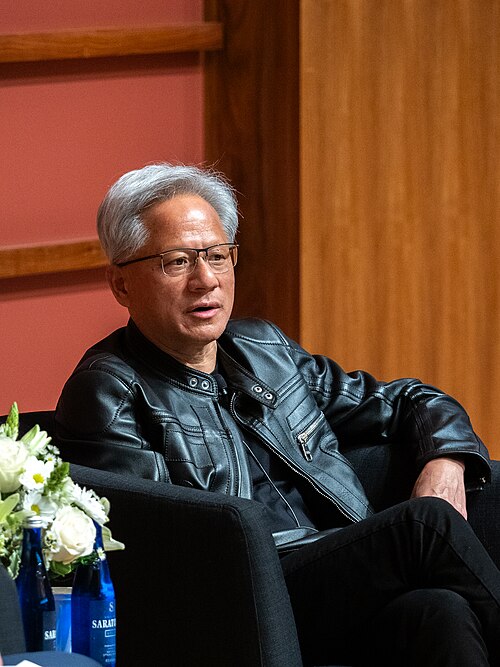
Jensen Huang returned as Nvidia’s chief executive on 23 November 2026, as Reuters reported on 25 November. Speaking to employees on 24 November, according to a transcript published by The Handbasket the following day, Huang linked his long tenure to his habit of learning and revising what he knows and what he focuses on. That is his own assessment, but it invites a wider question about learning when the tools of our working lives change so quickly.
Tools change. Knowledge still matters.
Consider a teacher asking AI to prepare exercises. It may save time, but choosing the right questions requires knowledge of the subject and of the pupils. If an exercise is wrong, the teacher is responsible for correcting it. Much the same is true of asking a model to summarise a historical text or check a computer program. The easier it becomes to obtain an answer, the more important it is to know how to judge it.
Not everyone starts in the same place
On 19 November 2026 the Council of the European Union adopted conclusions on education in the age of AI. It called for teacher training, skills development for workers and measures to prevent widening inequalities. That same day, the Adecco Group published a survey of 40,500 workers in 36 countries, linking involvement in redesigning work with a greater willingness to adapt. The survey reflects workers’ responses and does not establish causation on its own. The chance to learn something new also depends on time, access to training and support at work.
Perhaps it is worth returning to the opening question. If a machine can give us a ready-made answer, what do we want to have understood ourselves when we switch it off?
Room 9 explores changes in work and education without treating them as certain predictions. These two exhibits continue the discussion.
Sources and further reading
- Reuters, 25 Nov 2026: Jensen is back. What’s next for Nvidia?
- The Handbasket, 25 Nov 2026: transcript of the 24 November employee meeting
- Council of the European Union, 19 Nov 2026: Equipping Europeans for the age of AI
- Adecco Group, 19 Nov 2026: Global Workforce of the Future (corporate survey)
Archive photograph: Jensen Huang at Stanford, 9 April 2026. Anders Eidesvik, Wikimedia Commons, CC BY 4.0. CC BY 4.0
