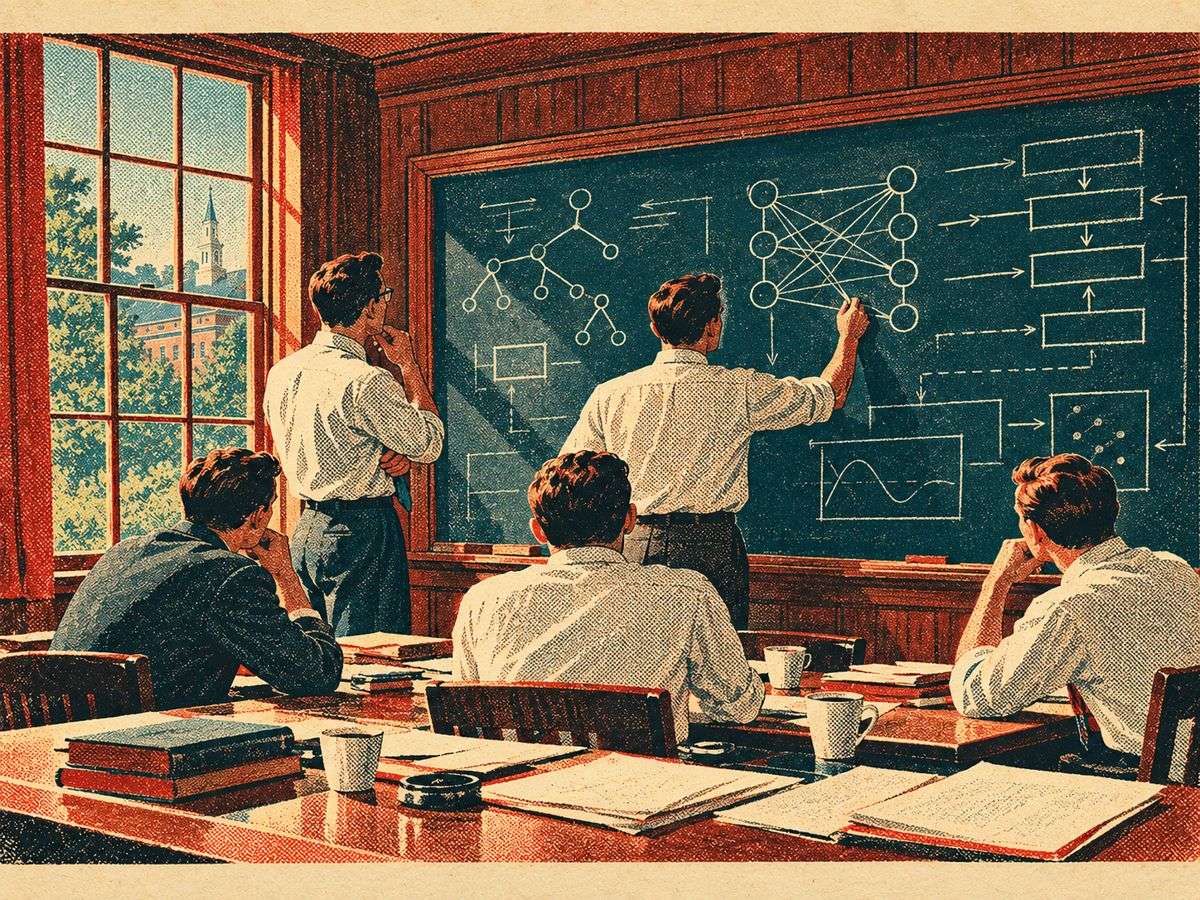
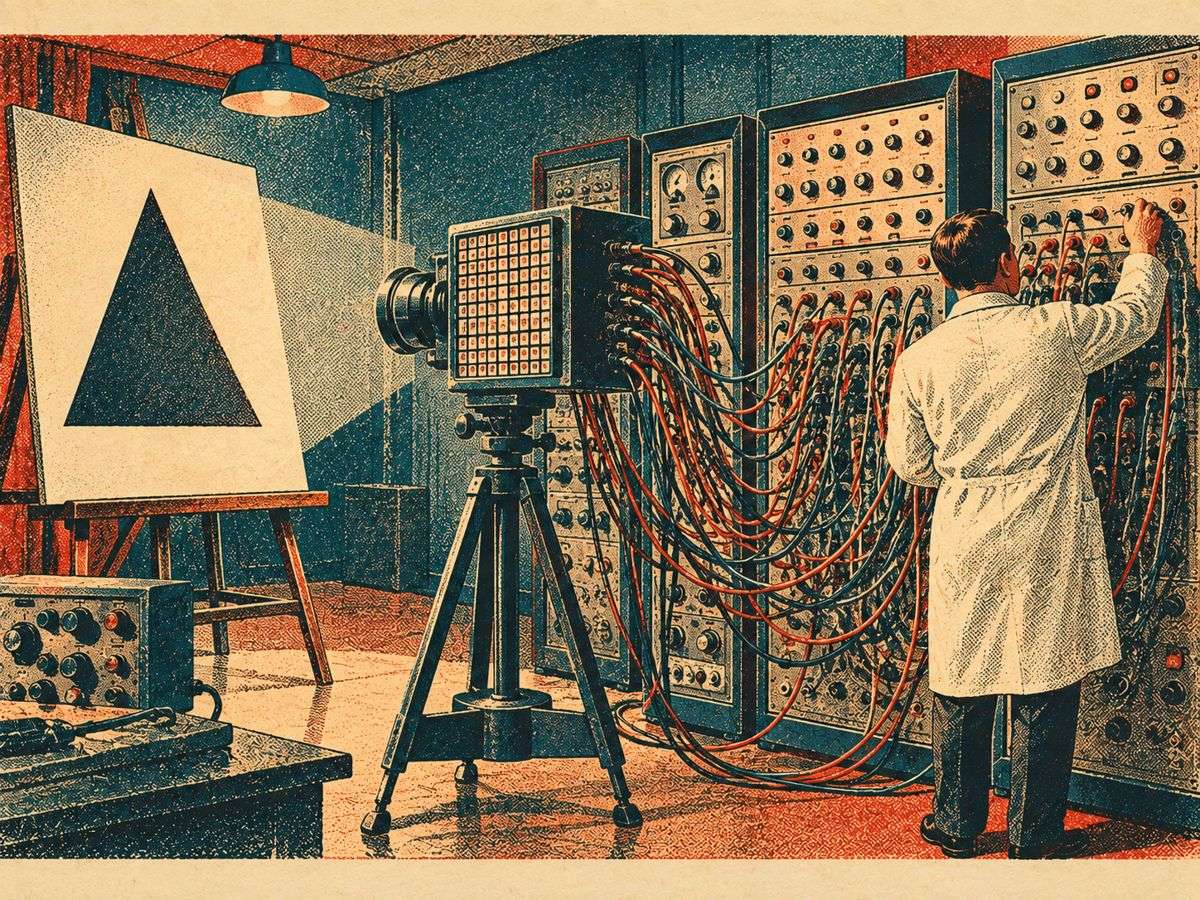
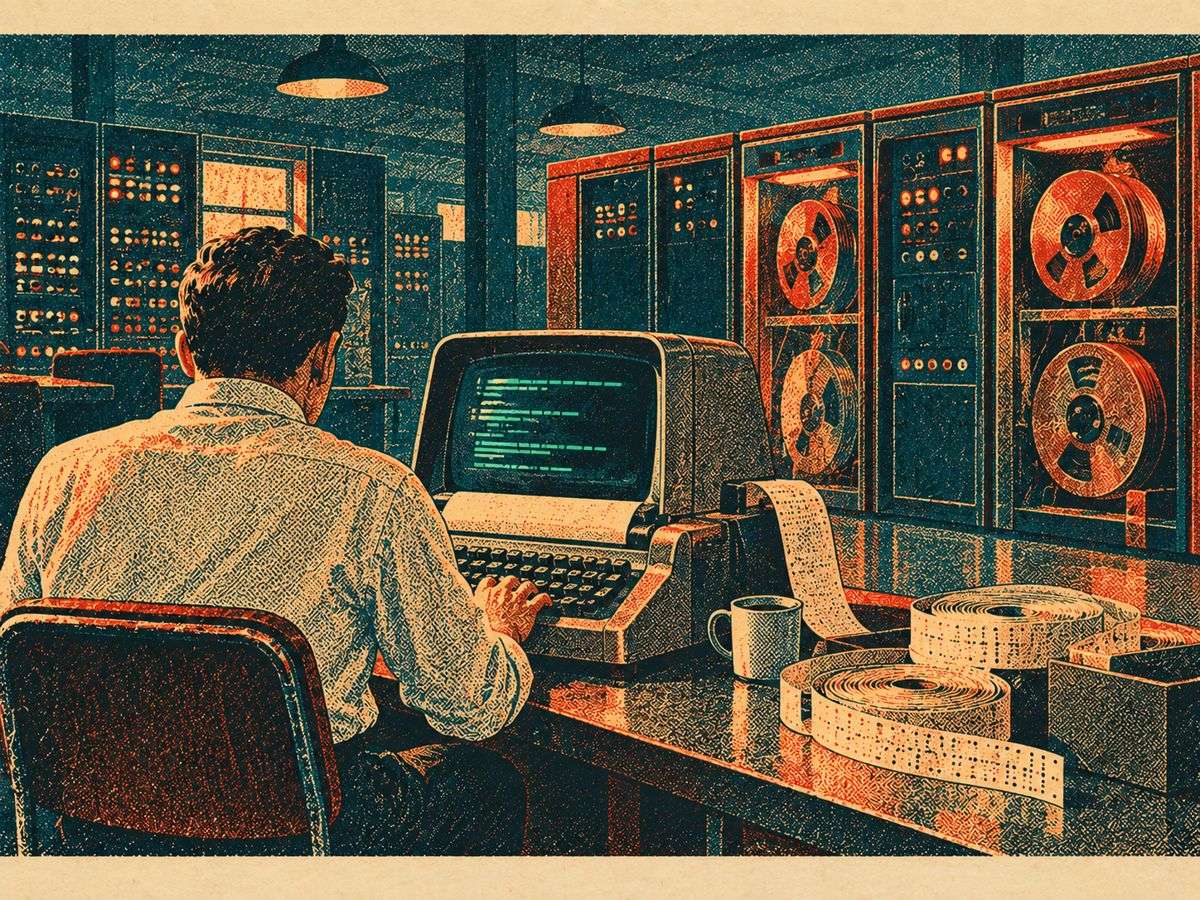
From early ideas about logic and self-moving machines to today’s language models. The visit combines history, evidence, curatorial interpretation and small experiments. Every major exhibit has its own page and the sources behind what you read.
Admission
Free, with no account or access code
Collection
62 standalone exhibits with documentation
Languages
English and Greek
Visit
10 rooms, one lab and free exploration
The idea behind the exhibition
Why do we build machines to do things we once considered our own?
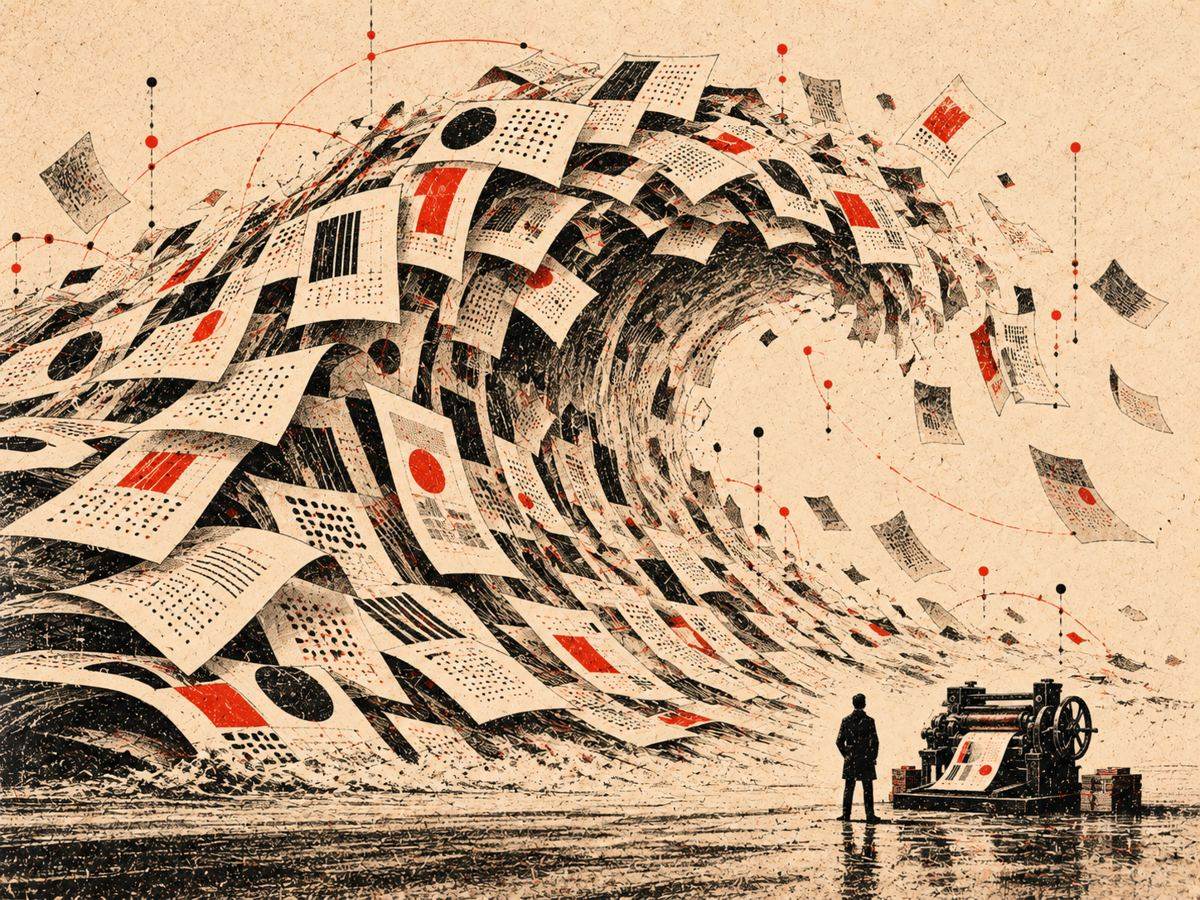
The history of artificial intelligence is not a straight line from invention to progress. It is a series of attempts to give machines abilities that had previously belonged to people: calculating, recognising, learning, using language and making decisions.
In every era, the tools and capabilities changed. So did the questions. What does it mean for a machine to “learn”? When is a correct-looking answer actually reliable? Who is responsible when a system makes a mistake? These questions connect the rooms.
Open collection
A museum you can check for yourself
You do not need a school code, a ticket or an account. The rooms, collection and lab are open to everyone.
The documentation is not hidden behind the exhibition. Exhibit pages show which source is being used, what it supports and whether an image is a historical record, a reconstruction or an artistic interpretation.
You can follow the full exhibition or choose a shorter route. If you change your mind, come back here and continue a different way.
Choose how much time you want to spend
Your choice changes the sequence of the back and next buttons inside the rooms. You can return to the lobby at any time and choose another route.
The rooms
Progress is stored only on this device. No account is required and no visit history is sent anywhere.
Your route
Your progress stays only in your browser. No account is created and no visit history is transmitted.
0 / 11
0
Greek precursors
Room 0, from Homer to Hero
The idea of a machine that moves, calculates or “thinks” on its own was not born in twentieth-century laboratories. Ancient Greeks imagined it in myth, examined it in philosophy and, in some cases, built remarkable mechanisms.
None of these exhibits is “ancient artificial intelligence”. They are ancestors of the questions: can a machine move by itself, calculate, or follow rules of reasoning? The same questions return many centuries later in the rooms that follow.
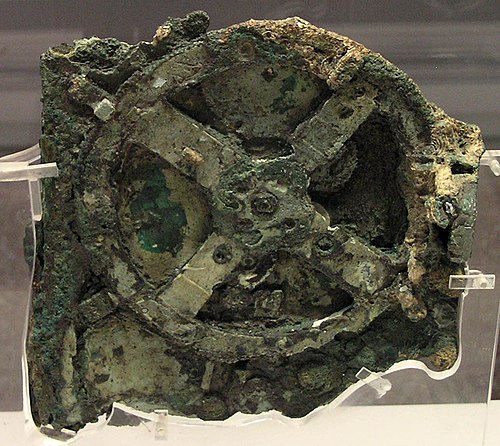
Featured exhibitAntikythera MechanismThe largest surviving fragment: the large spoked wheel is visible. Its bronze gears modelled astronomical cycles. The original is displayed at the National Archaeological Museum in Athens.Photograph: Marsyas, CC BY 2.5, via Wikimedia Commons
AI-generated illustration
~700BCE
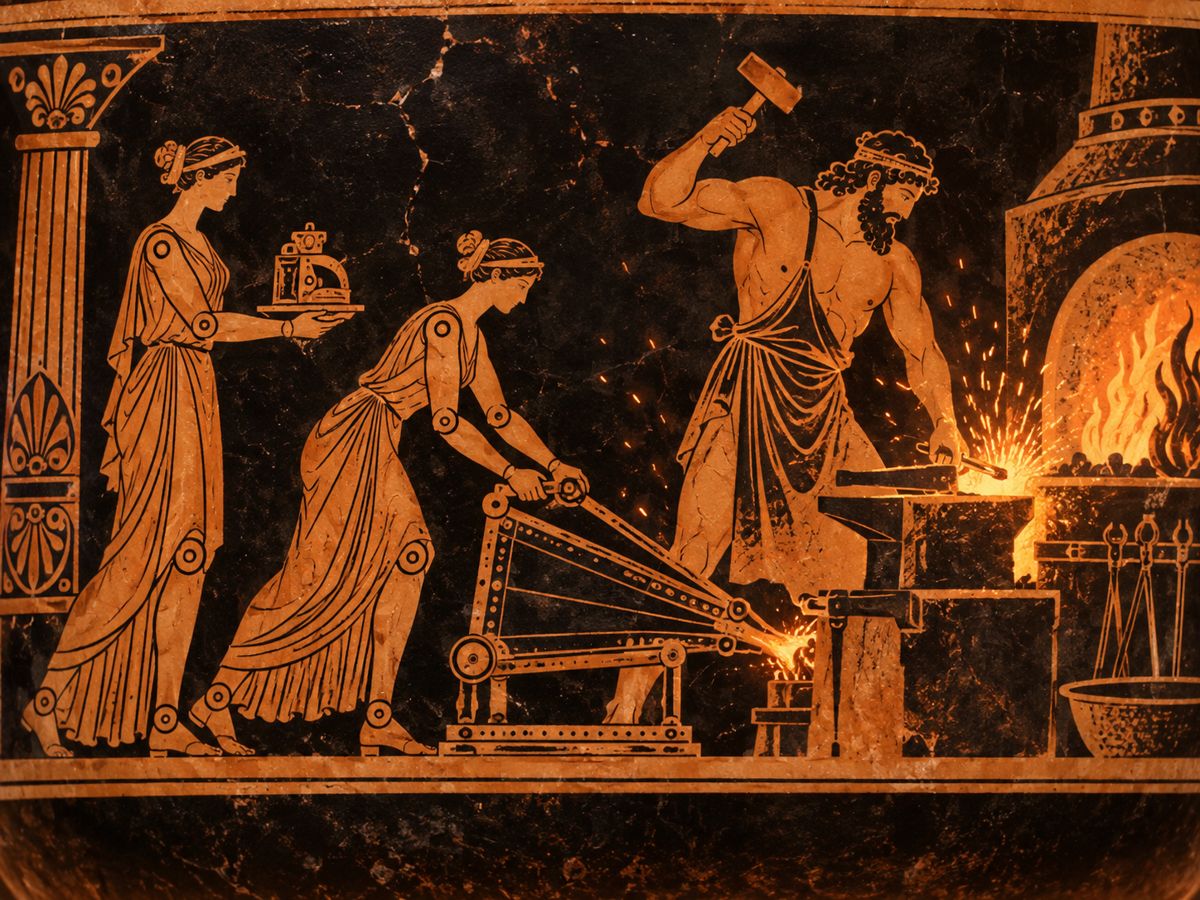
Hephaestus’ golden assistants
In the Iliad, the craftsman god has made golden assistants who resemble living young women. Homer says they have intelligence, voice and strength. It may be one of the earliest literary descriptions of “intelligent machines”.
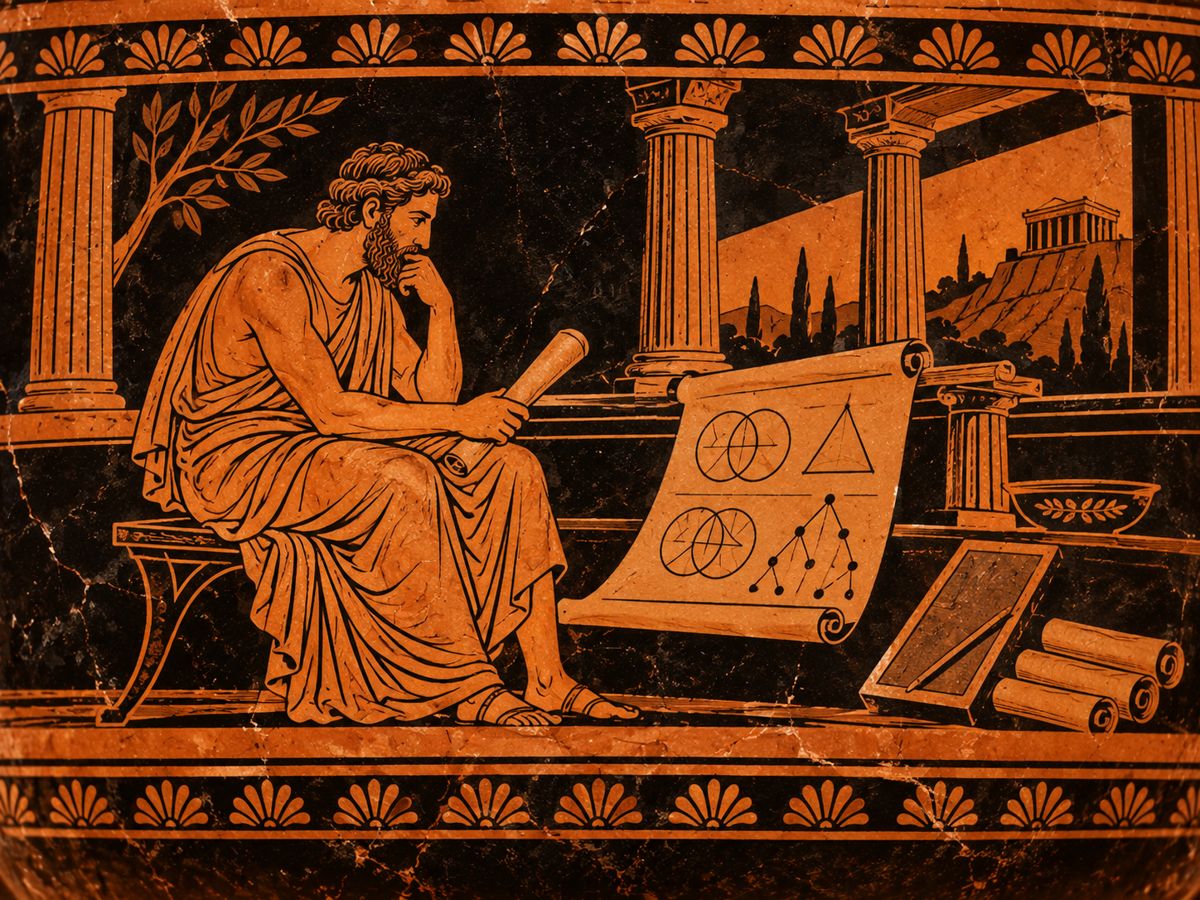
Aristotle systematises reasoning: rules that lead from valid premises to valid conclusions. Many centuries later, rule-based AI would build on this idea. In the Politics he also imagines tools that could perform their work by themselves, without human hands.
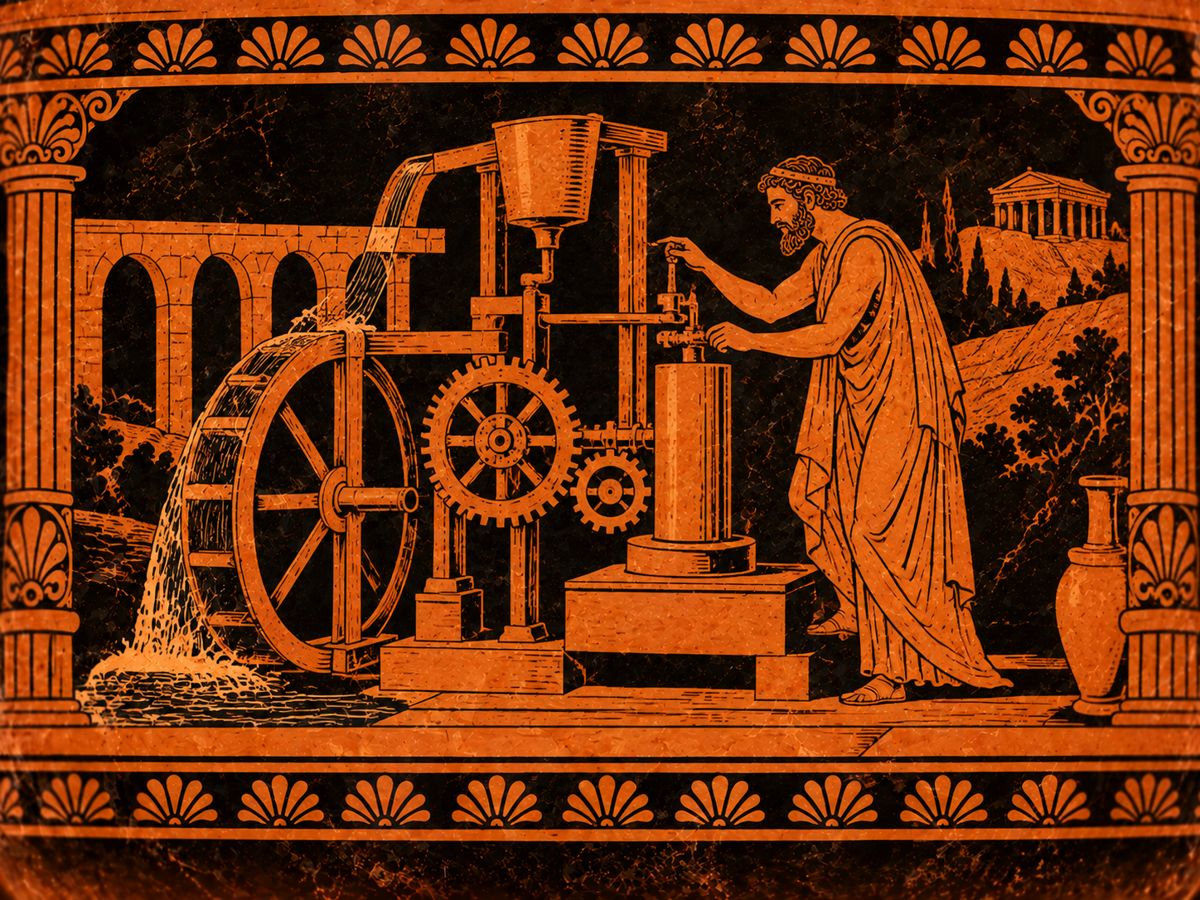
In Alexandria, Ctesibius improves the water clock with a float that regulates the flow of water automatically. It is among the earliest known examples of automatic control through feedback: the mechanism corrects its own operation. Centuries later, feedback would become central to cybernetics and AI. He also developed pumps and the water organ.
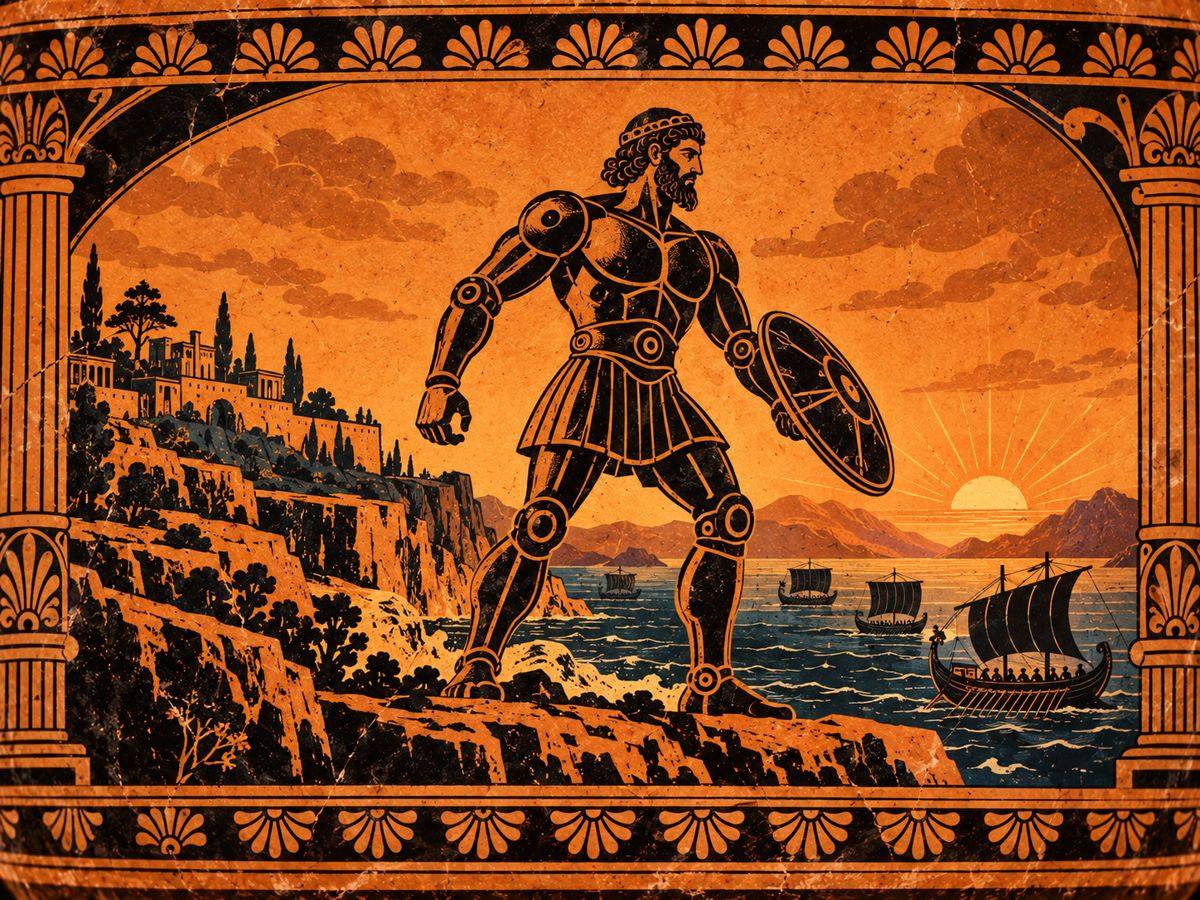
In Apollonius of Rhodes’ Argonautica, a bronze giant made by Hephaestus guards Crete by circling the island. A mythical robot-like guardian, with a single vulnerable point.
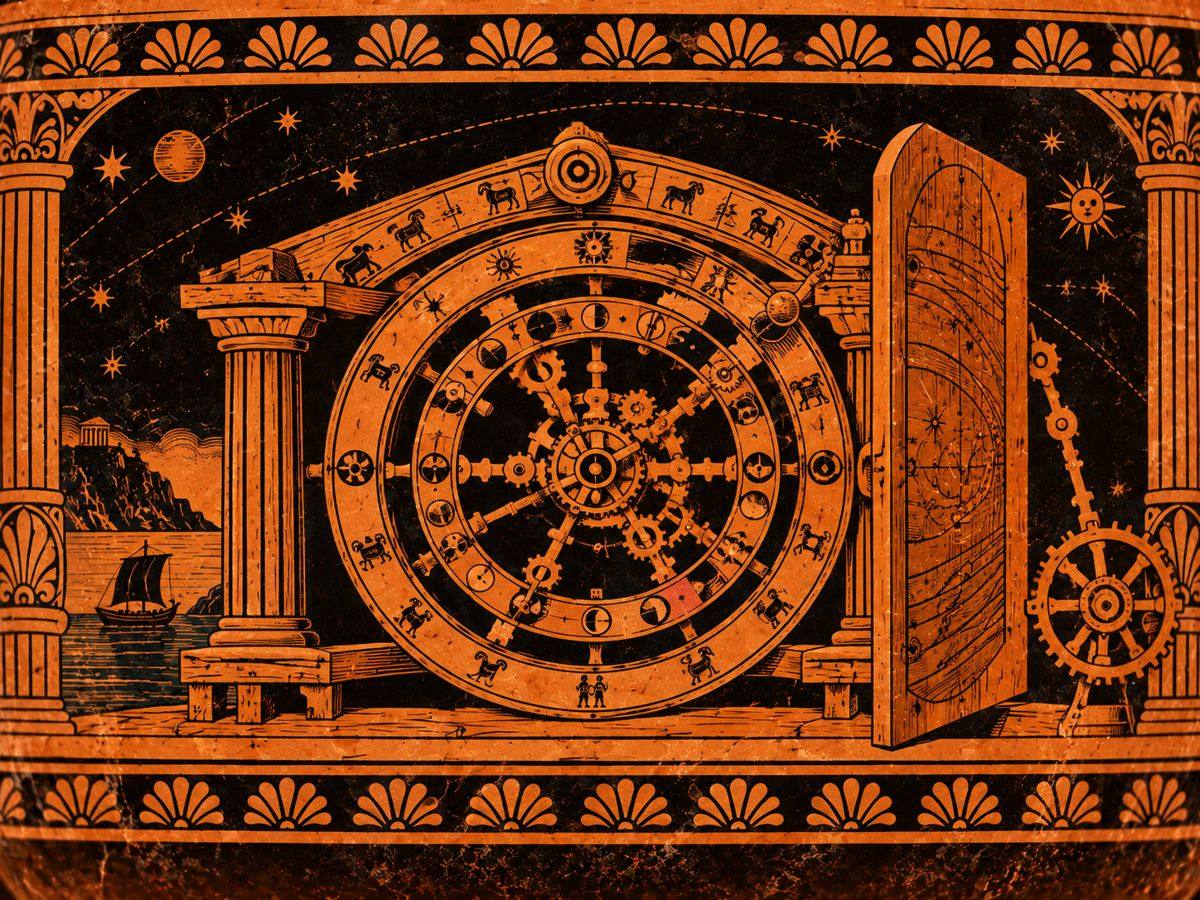
Recovered from a shipwreck in 1901 and dated to roughly the second to first century BCE, the mechanism used dozens of gears to model the positions of the Sun and Moon and predict eclipses. It is often described as the first analogue computer. The original is held by the National Archaeological Museum in Athens.
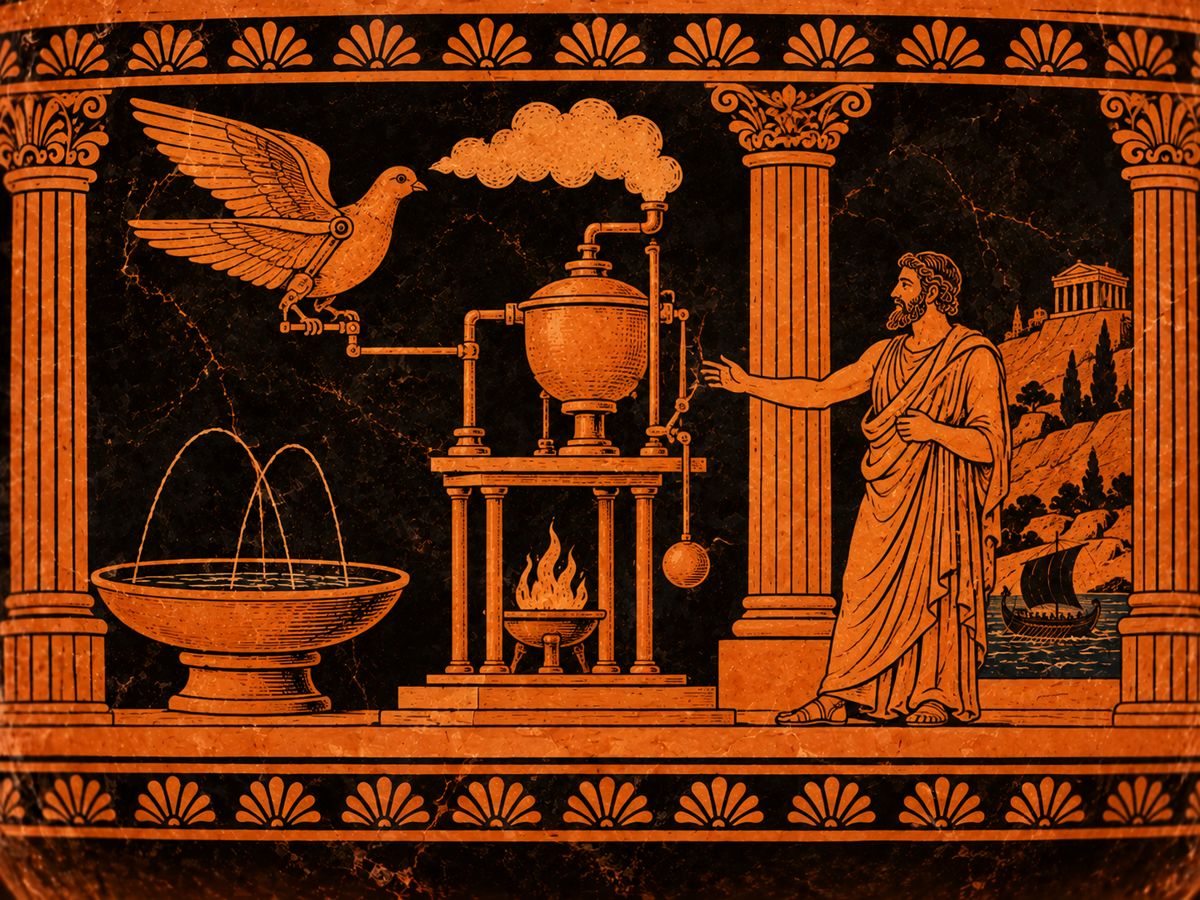
Hero describes automatic spectacles, including birds made to sing with air and water, and a cart that moves by itself. A rope wound around its axle, with pegs placed at selected points, determines when it travels straight and when it turns. In modern terms, it resembles a program stored in rope.
Build the “rope” of instructions and press Start. Guide the cart from the starting point to the temple without hitting a column. The cart cannot see anything: it only follows your instructions.
Takeaways
The dream of a “thinking machine” is far older than computers, and Greek myth and engineering contain some of its earliest surviving expressions.
The Antikythera Mechanism and Hero’s cart illustrate two fundamental computing ideas: mechanical calculation and a stored sequence of instructions.
A program, however clever it may appear, follows what has been specified for it. The story changes when machines begin to learn patterns from data.
Freeth, T. et al. (2006). Decoding the ancient Greek astronomical calculator known as the Antikythera Mechanism. Nature.
Hero of Alexandria, Automata; Pneumatica.
Mayr, O. (1970). The Origins of Feedback Control. MIT Press.
Mayor, A. (2018). Gods and Robots: Myths, Machines, and Ancient Dreams of Technology. Princeton University Press.
1
The beginnings
Room 1, 1943–1966
Before powerful computers existed, there was a question. Mathematicians and engineers asked whether thought could be described by rules. If so, perhaps a machine could follow them.
Featured exhibitA conversation with ELIZAThis is what a conversation with a chatbot looked like in 1966: capital letters on a computer terminal.
AI-generated illustration
1943
The artificial neuron
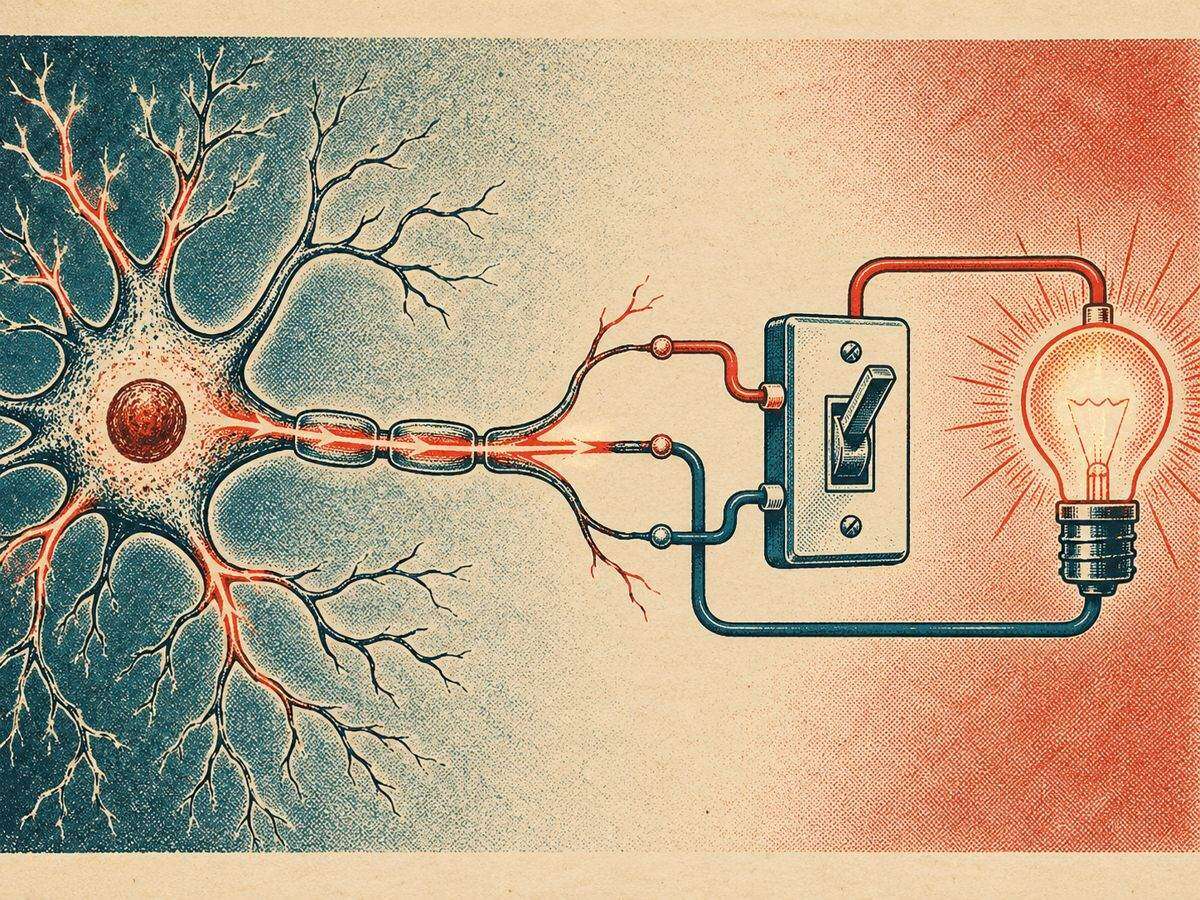
McCulloch and Pitts describe a brain neuron as a simple mathematical switch: it either fires or it does not. Their abstraction is an ancestor of today’s artificial neural networks.
Alan Turing proposes a test: if, during a written conversation, you cannot tell whether you are speaking to a person or a machine, should the machine count as intelligent?
A group of researchers meets for a summer in the United States. The phrase “artificial intelligence”, proposed the previous year, becomes the name of a new scientific field.
Type something, for example “I feel tired today” or “My mother makes me anxious”. Then open “See what happens behind the scenes”.
Send a message to see which rule is triggered.
Takeaways
ELIZA looks for keywords and inserts parts of your sentence into prepared response patterns. It does not “know” what the words mean.
In languages with rich inflection, ELIZA’s simple pattern matching can produce awkward replies. That is exactly the point: it is not understanding the conversation.
The “ELIZA effect” is still with us: people tend to attribute understanding to systems that merely respond convincingly.
Room documentation (updated October 2026)
McCulloch, W. & Pitts, W. (1943). A logical calculus of the ideas immanent in nervous activity.
Turing, A. (1950). Computing Machinery and Intelligence. Mind.
McCarthy, J. et al. (1955). A Proposal for the Dartmouth Summer Research Project on Artificial Intelligence.
Rosenblatt, F. (1958). The Perceptron. Psychological Review.
Weizenbaum, J. (1966). ELIZA. Communications of the ACM.
2
The AI winters
Room 2, 1969–1997
Early researchers made bold promises on short timelines. When results lagged behind expectations, funding was cut. These periods became known as “AI winters”. Between them, one approach appeared commercially useful: encoding expert knowledge as rules.
Featured exhibitDeep Blue, 1997One of Deep Blue’s two towers, now displayed at the Computer History Museum. Its victory helped bring AI back into public attention.Photograph: James the photographer, CC BY 2.0, via Wikimedia Commons
AI-generated illustration
1969
The limits of the perceptron
Minsky and Papert show mathematically that a simple perceptron cannot solve some basic classes of problems. Research on neural networks then loses momentum for years.
A report commissioned by the British government argues that AI research has failed to meet many of its goals. Funding is cut and the first AI winter begins in Britain.
Programs containing hundreds or thousands of “if… then…” rules enter business use. Digital Equipment’s XCON configures computer orders and is credited with major savings.
Expert systems prove expensive to maintain and brittle when faced with exceptions. At the same time, the market for specialised AI computers collapses.
IBM’s computer defeats the reigning world chess champion. It does not “think” like a human player: it searches enormous numbers of positions at high speed. AI returns to front-page news.
The system identifies animals using rules. It checks them from top to bottom and keeps the first rule that matches. Turn rules on or off and try to classify every animal correctly.
Animal
Features
Answer
Takeaways
Rules work while the world is predictable. Every exception needs another rule, and each new rule can interfere with an old one.
That made expert systems expensive and brittle, leading to the next idea: instead of writing every rule, let the machine learn from examples.
The AI winters also offer a lesson for today: inflated expectations are a risk for any technology.
Room documentation (updated October 2026)
Minsky, M. & Papert, S. (1969). Perceptrons. MIT Press.
Lighthill, J. (1973). Artificial Intelligence: A General Survey. Science Research Council.
McDermott, J. (1982). R1: A Rule-Based Configurer of Computer Systems. Artificial Intelligence.
Campbell, M., Hoane, A. J. & Hsu, F. (2002). Deep Blue. Artificial Intelligence.
3
How a machine learns
Room 3, 1959–today
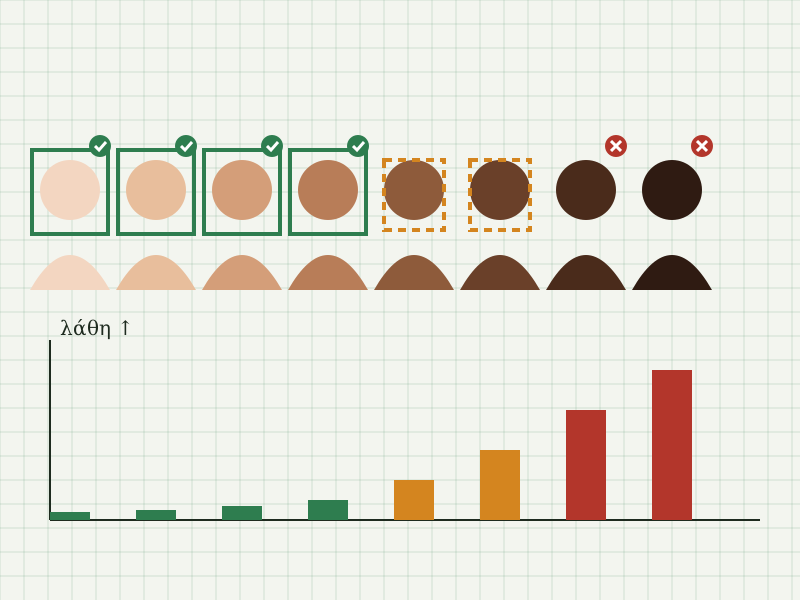
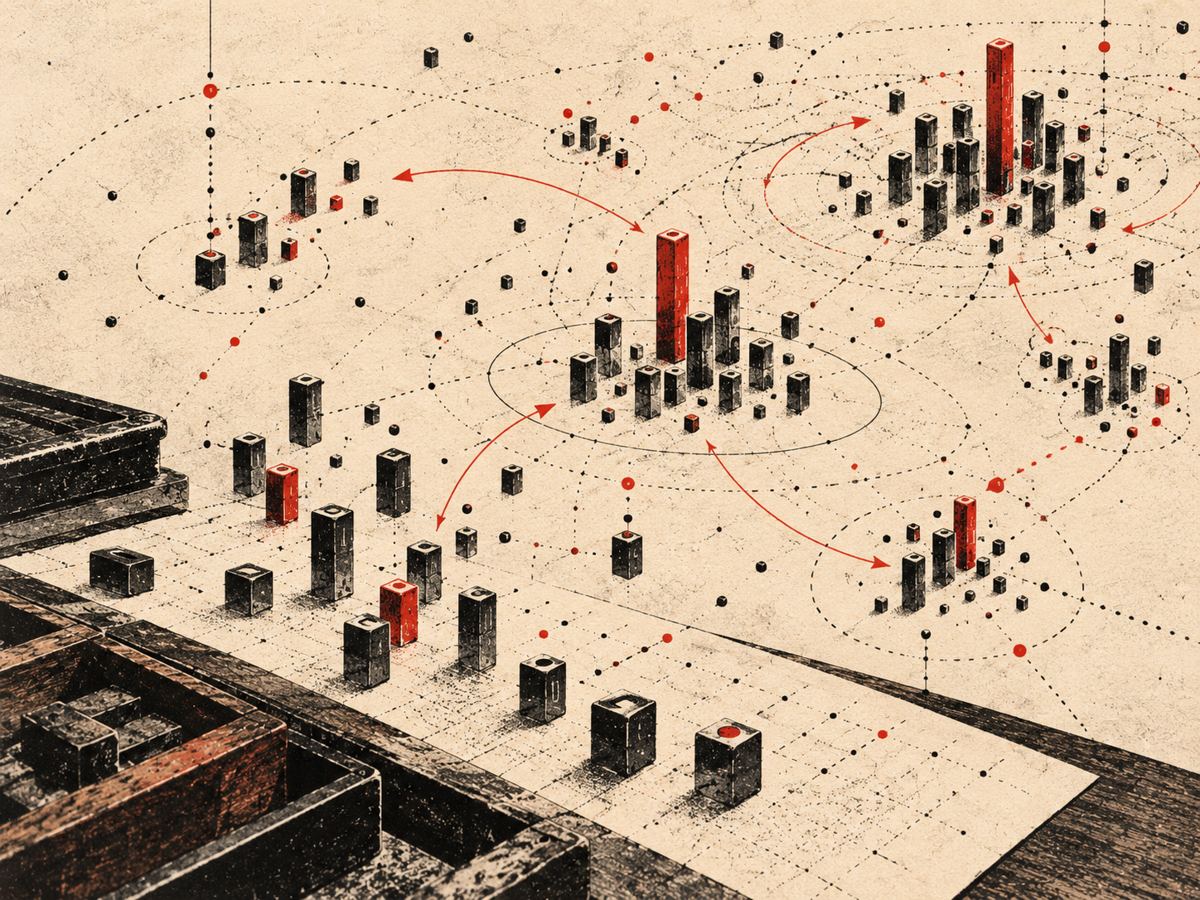
In machine learning, we do not write every rule. We give the machine examples and let it find patterns. Whatever is present in those examples, useful or distorted, can pass into the model.
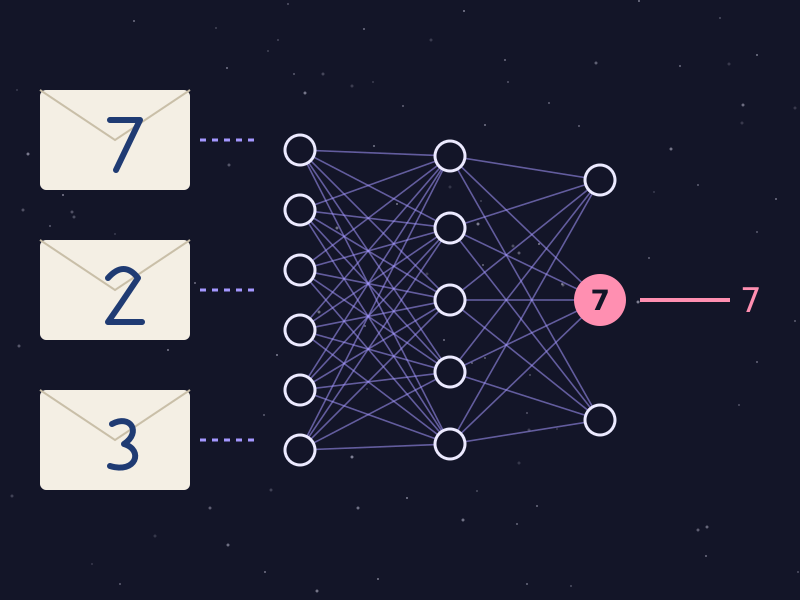
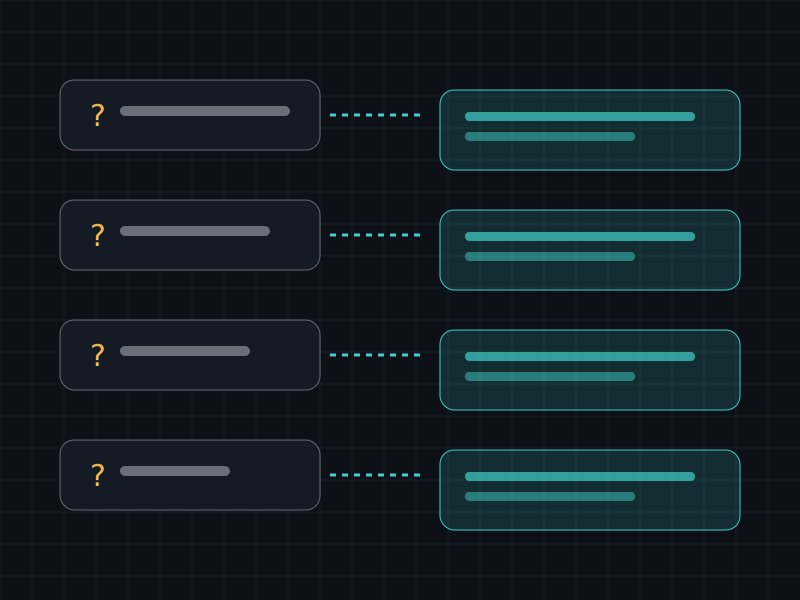
Featured exhibitA datasetThe machine learns from labelled examples. What will it say about a green fruit it has never seen before?
AI-generated illustration
1959
The term “machine learning”
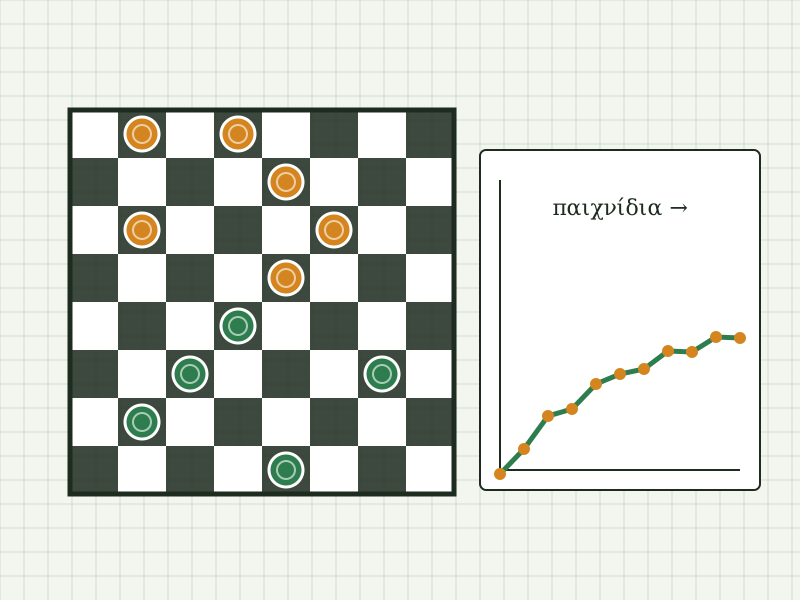
IBM researcher Arthur Samuel develops a checkers program that improves by playing repeatedly and uses the term “machine learning”.
Fei-Fei Li’s team creates a huge database of millions of labelled images. It becomes clear that the quantity and quality of data can matter as much as the algorithm.
Joy Buolamwini and Timnit Gebru show that commercial face-analysis systems make far more errors for darker-skinned women than for lighter-skinned men. The result exposes the consequences of unrepresentative data and uneven system performance.
The model looks at two features: colour and size. For each new fruit, it finds the closest example you provided and copies its label. Choose the training examples and see how well it performs on the test set.
Training examples
Test fruit
Model prediction
Nearest example
Takeaways
A model can only learn from the examples it sees. If it sees only red apples, a green apple may look like something else.
Bias is often not inserted deliberately. It can come from missing data or from datasets that reproduce unfair decisions made in the past.
Before trusting an AI system, ask: what data was it trained on, and who is missing from that data?
Room documentation (updated October 2026)
Samuel, A. (1959). Some Studies in Machine Learning Using the Game of Checkers. IBM Journal.
Deng, J. et al. (2009). ImageNet: A Large-Scale Hierarchical Image Database. CVPR.
Buolamwini, J. & Gebru, T. (2018). Gender Shades. Proceedings of Machine Learning Research.
Reuters (2018). Amazon scraps secret AI recruiting tool that showed bias against women.
4
Neural networks
Room 4, 1986–2024
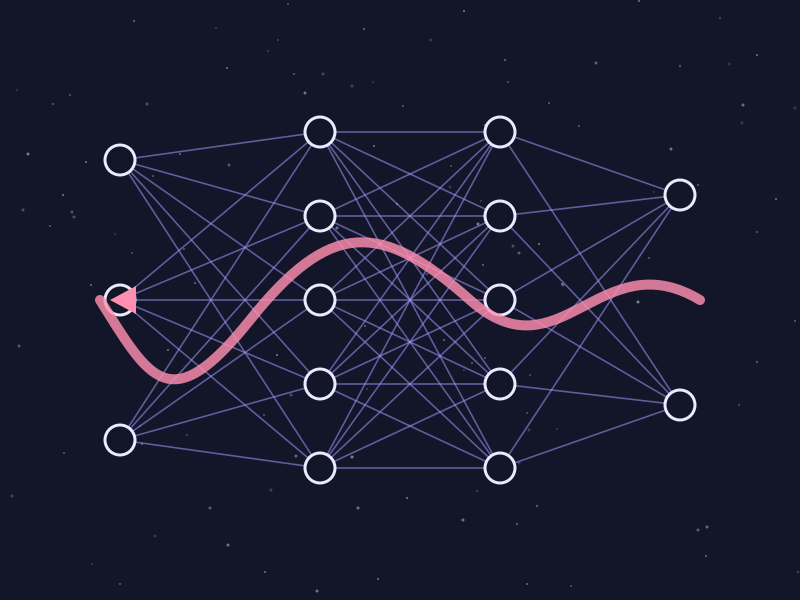
An artificial neuron does something simple: it weighs its inputs and produces a decision. The power comes from connecting thousands or billions of such units in layers and adjusting their weights through training.
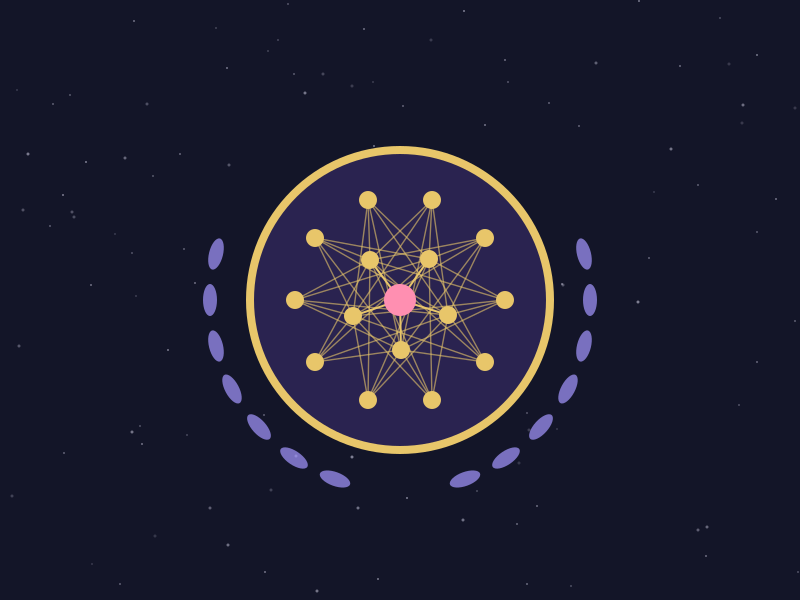
Featured exhibitA small neural networkEach line represents a weight. Learning means adjusting many of these weights.
AI-generated illustration
1986
Backpropagation
Rumelhart, Hinton and Williams show how a multi-layer network can correct its errors by propagating the error signal backwards. This helps overcome the limitation highlighted by Minsky and Papert.
Yann LeCun trains a network to recognise handwritten digits in postal ZIP codes. Related systems were later used for tasks such as reading bank cheques.
A deep neural network trained on graphics processors wins the ImageNet image-recognition competition by a large margin. The modern deep-learning era accelerates.
John Hopfield and Geoffrey Hinton are awarded the 2024 Nobel Prize in Physics for foundational discoveries and inventions that enabled machine learning with artificial neural networks.
The neuron looks at two inputs: whether it is sunny and whether a friend is coming. Choose a decision rule and adjust the weights yourself, or let it learn from its mistakes.
Sunny
Friend
Correct decision
Neuron says
The neuron adds: (sunny × weight) + (friend × weight) + bias. If the result is above zero, it says “go”.
Takeaways
“Learning” in a neural network means repeatedly making small adjustments to the weights until errors are reduced.
A single neuron cannot learn the “exactly one” rule. More layers are needed; this is part of what makes deep learning “deep”.
The language models in the next room are, at their core, neural networks with billions of learned weights.
Room documentation (updated October 2026)
Rumelhart, D., Hinton, G. & Williams, R. (1986). Learning representations by back-propagating errors. Nature.
LeCun, Y. et al. (1989). Backpropagation Applied to Handwritten Zip Code Recognition. Neural Computation.
Krizhevsky, A., Sutskever, I. & Hinton, G. (2012). ImageNet Classification with Deep Convolutional Neural Networks. NeurIPS.
Silver, D. et al. (2016). Mastering the game of Go with deep neural networks and tree search. Nature.
The Royal Swedish Academy of Sciences (2024). The Nobel Prize in Physics 2024.
5
Language and the first LLMs
Room 5, 1948–2022
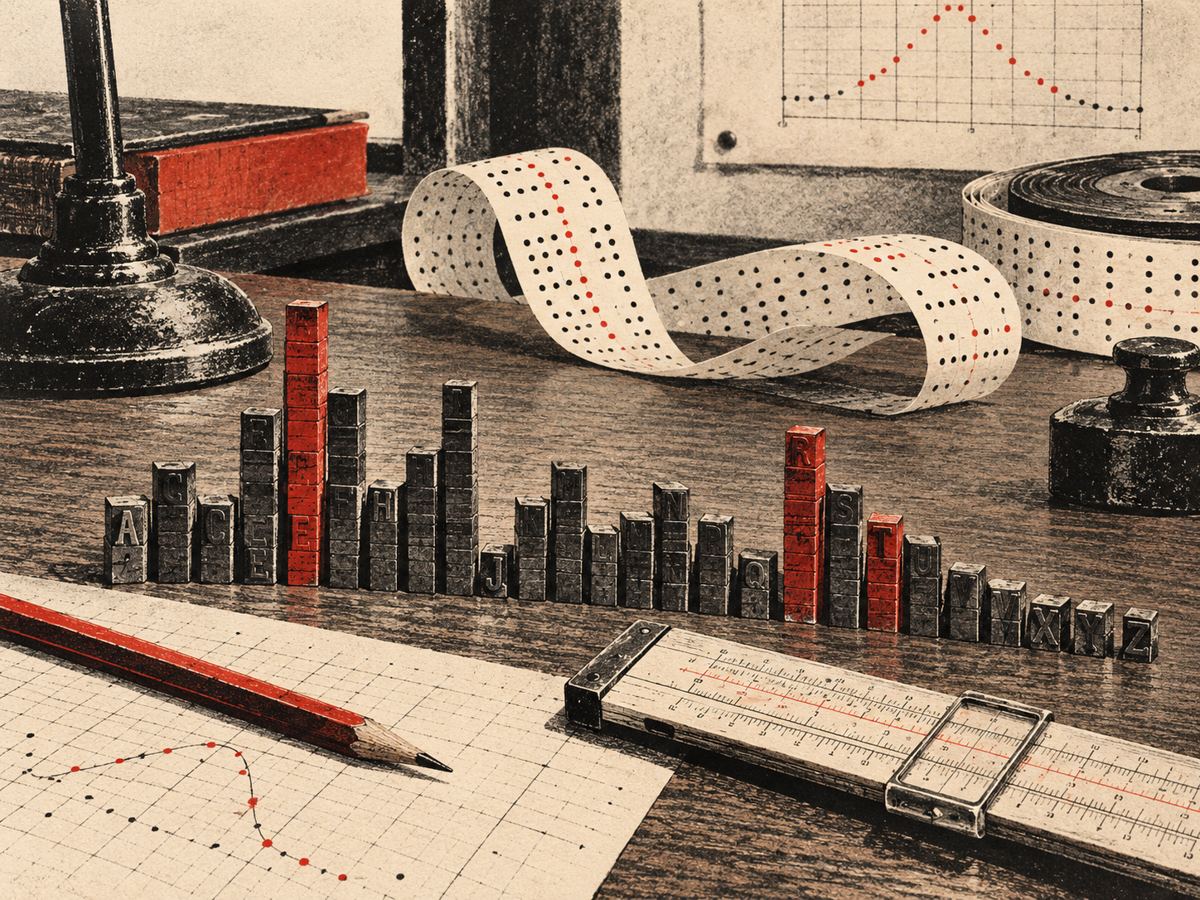
At its core, a language model does something simple: it predicts what comes next. The idea is old. What changed is scale: how much text the model learns from and how much context it can use.
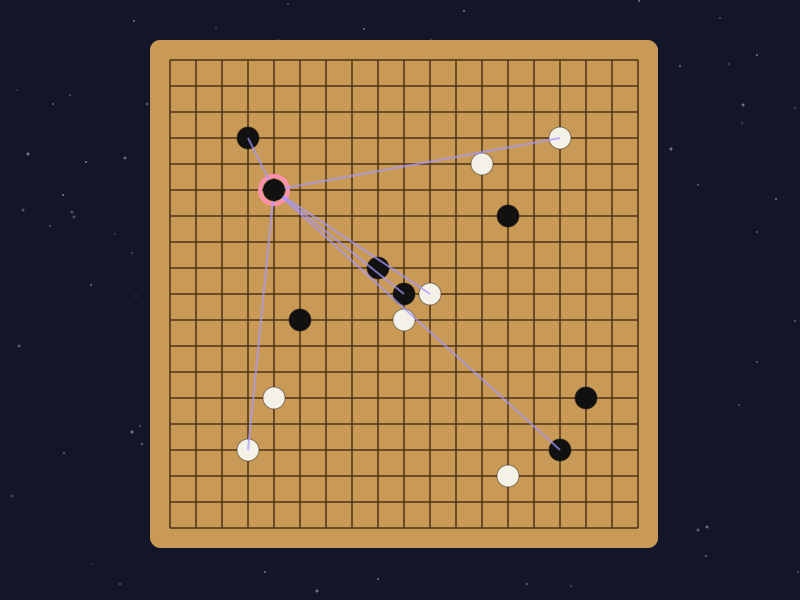
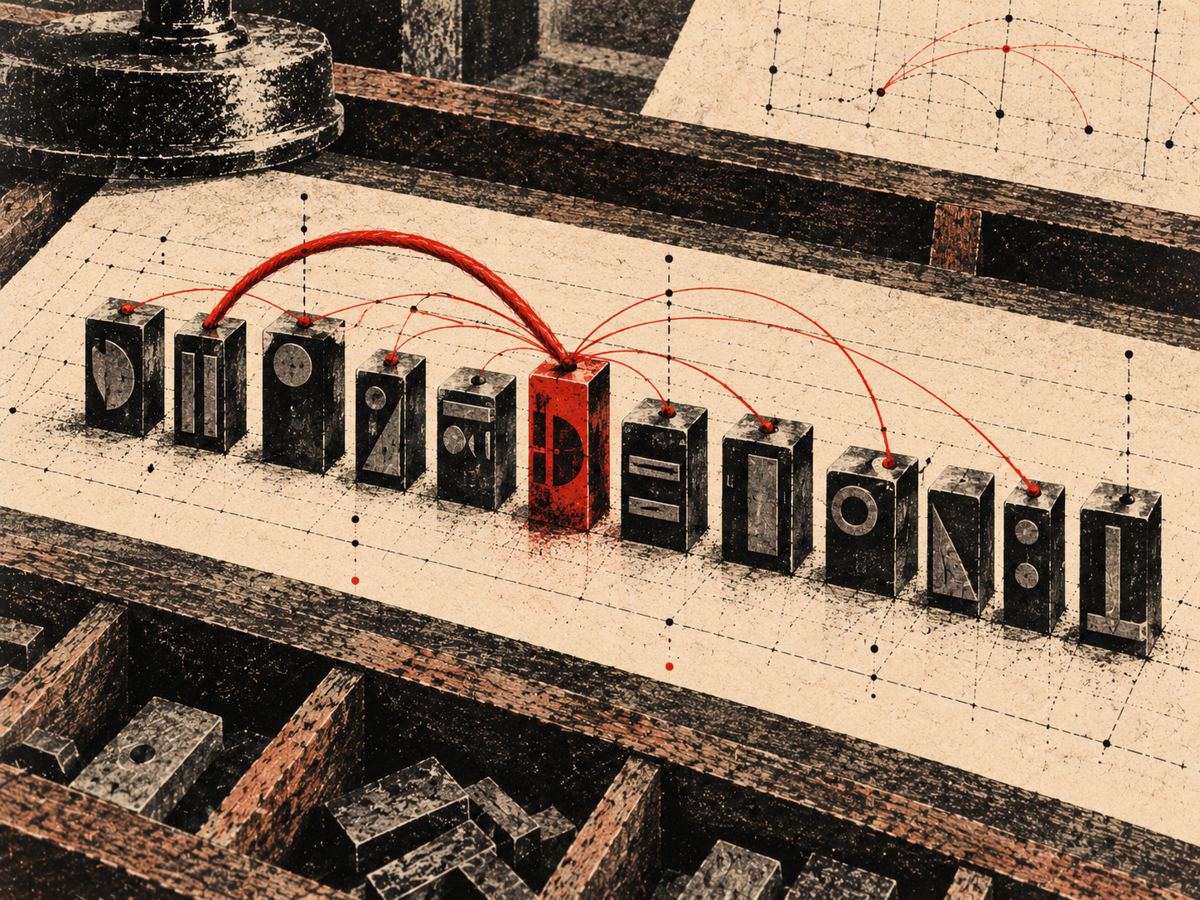
Featured exhibitThe attention mechanismThe Transformer idea: each token can attend to other tokens in the sequence to build a context-sensitive representation.
AI-generated illustration
1948
Shannon measures prediction
Claude Shannon shows that text that resembles English can be generated by measuring which symbols or words tend to follow others.
On 30 November 2022, a conversational language-model interface is released publicly as a research preview. Generative AI begins to enter everyday life at unprecedented scale.
Tap a word to see which other words may receive more weight when an attention mechanism builds its representation.
Important: this is an educational simulation. The weights are illustrative and are not outputs from a specific model. Attention weights alone are also not a complete explanation of why a model produced a particular answer.
Interactive exhibit
Guess the next word
This is the basic operation repeated by an LLM during generation. Choose the word that fits best and compare it with the illustrative model probabilities.
The percentages are illustrative. A real model assigns probabilities across a vocabulary containing tens of thousands of tokens at each step.
Interactive exhibit
Train your own mini language model
The mini model reads the text and counts which words follow which, echoing Shannon’s early experiments. Press “Generate a sentence”, then tap any word to inspect the possible next steps. You can replace the training text with your own.
Takeaways
A basic LLM does not “look up” a ready-made answer. It generates a continuation token by token.
Your mini model sees only the previous word, so it quickly loses context. A Transformer can use a much wider context, which is one reason modern models are far more coherent.
A sentence that “sounds right” is not necessarily true. This helps explain why language models can hallucinate.
Room documentation (updated October 2026)
Shannon, C. (1948). A Mathematical Theory of Communication.
Mikolov, T. et al. (2013). Efficient Estimation of Word Representations in Vector Space.
Vaswani, A. et al. (2017). Attention Is All You Need.
Radford, A. et al. (2018). Improving Language Understanding by Generative Pre-Training. Devlin, J. et al. (2018). BERT.
Brown, T. et al. (2020). Language Models are Few-Shot Learners.
6
How an LLM is made today
Room 6, the production line
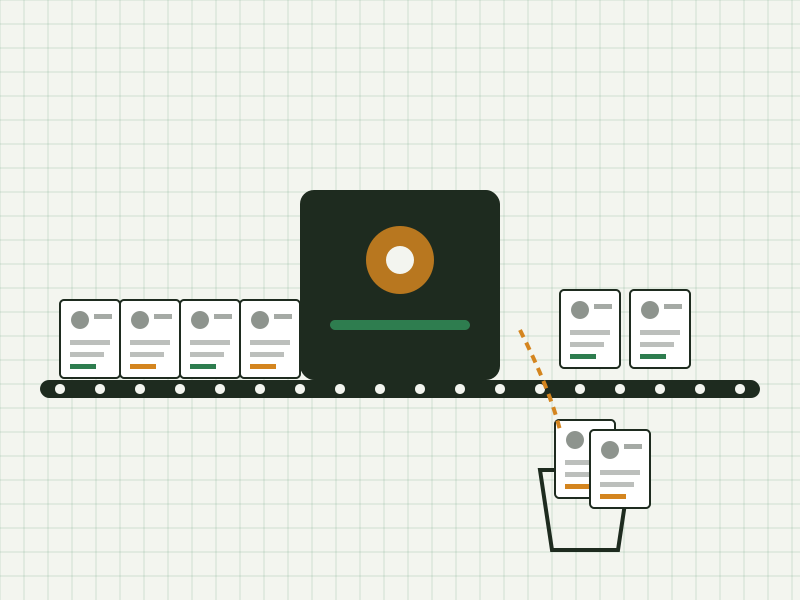
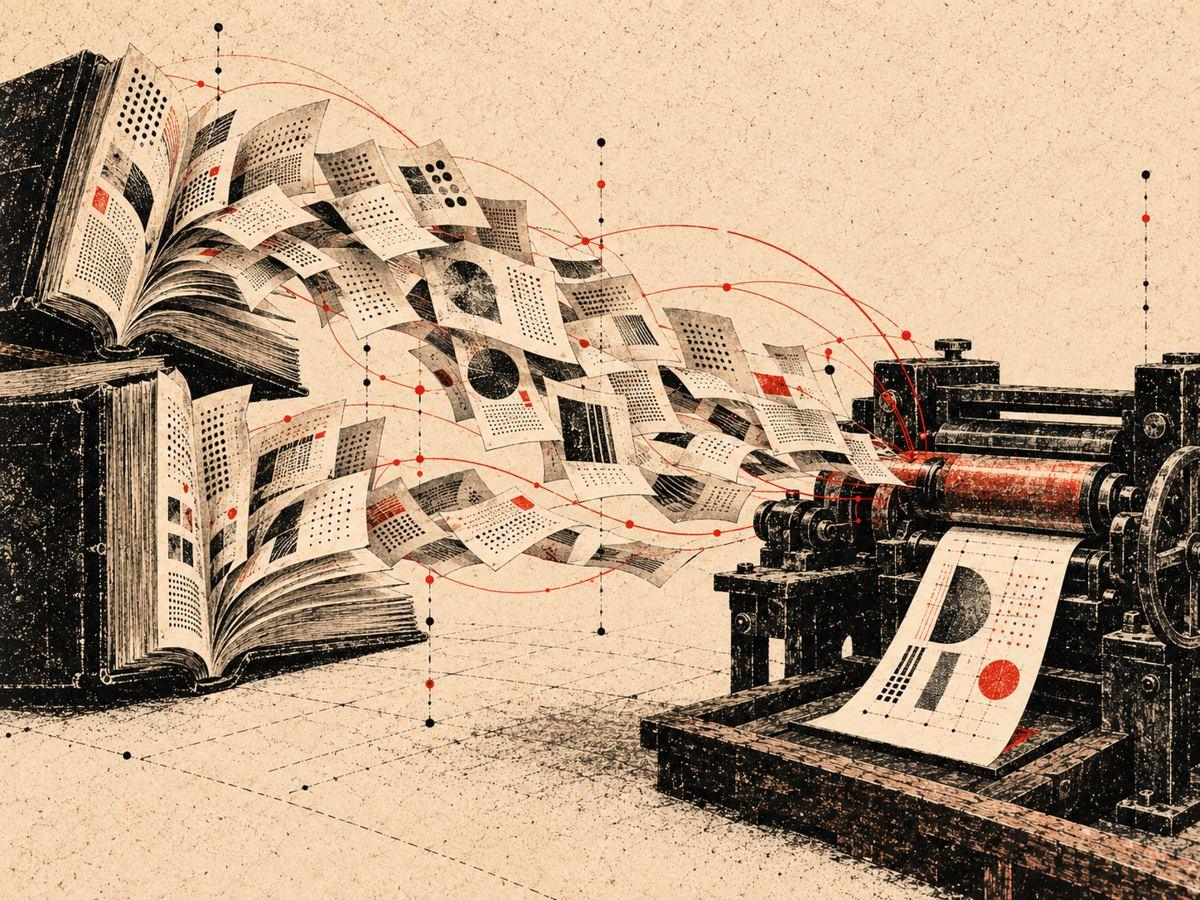
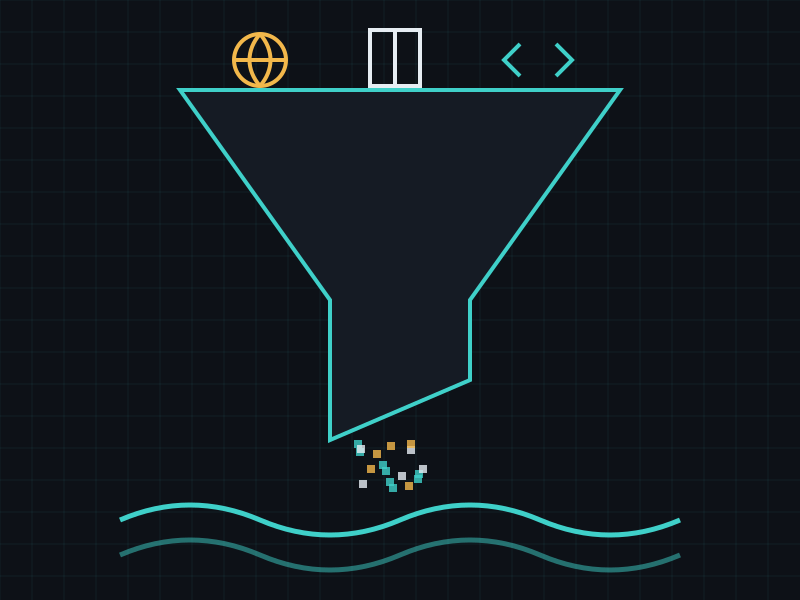
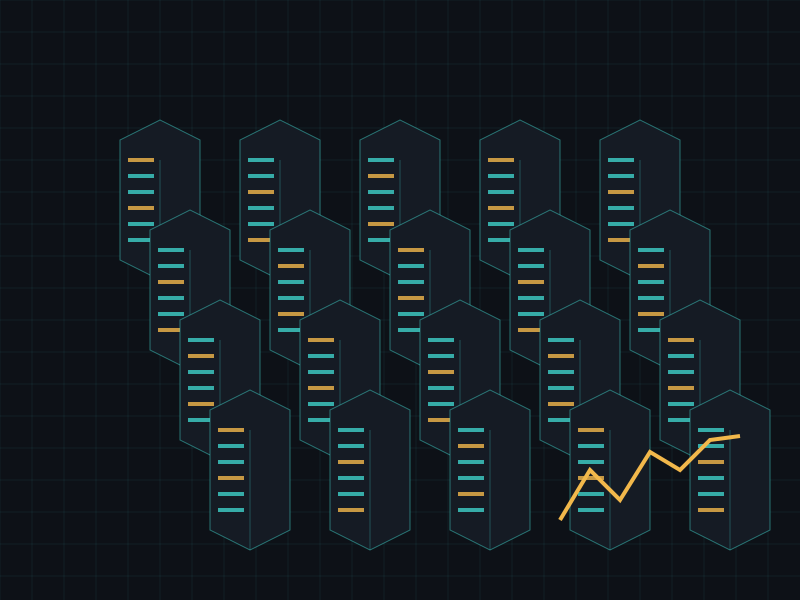
A modern language model is not written line by line by programmers. It passes through a sequence of stages, more like a production line, involving data, compute, training, evaluation and deployment. Each stage adds capabilities and introduces trade-offs.
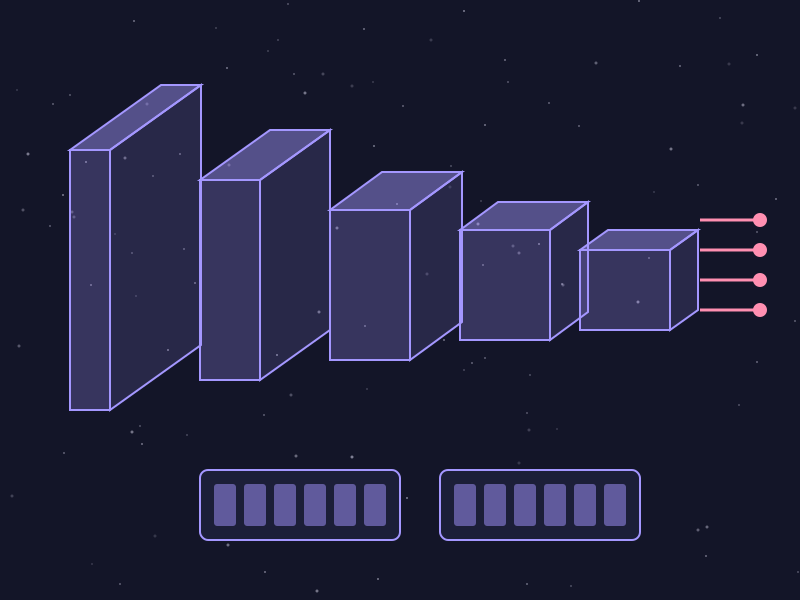
Featured exhibitThe graphics processorGraphics processors, originally designed for rendering images and games, became key hardware for training modern AI systems.
AI-generated illustration
1
Data collection
Huge quantities of text are gathered from sources such as websites, books and code. Selection and cleaning influence what a model can learn, how well it performs and which biases it may reproduce.
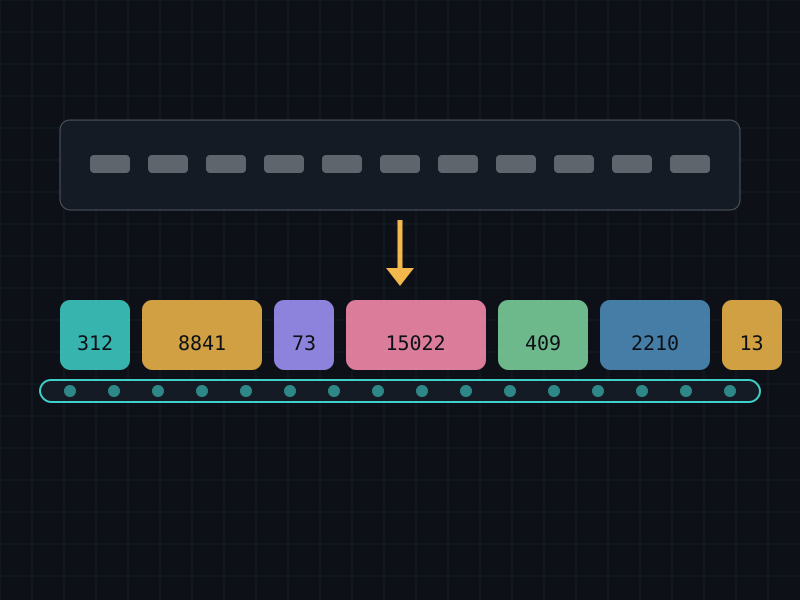
Text is split into smaller units called tokens, which may be whole words or pieces of words. The model processes numerical identifiers rather than written characters directly.
The model repeatedly learns to predict the next token across enormous text corpora and large amounts of computing. This stage gives it broad language ability and general patterns, but not necessarily assistant-like behaviour.
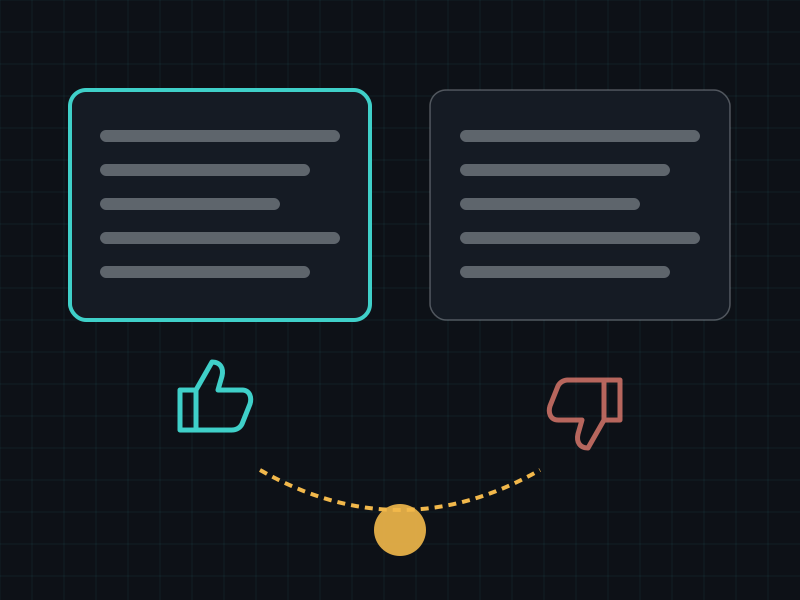
People, and sometimes other models, evaluate answers. Training then pushes the model toward responses judged more helpful, honest or safe. A well-known approach is reinforcement learning from human feedback (RLHF).
When you type a prompt, a basic language model does not retrieve a ready-made answer from a database. It generates a response token by token, although some modern systems can also call search engines, tools or external knowledge sources.
Models can invent details while sounding completely confident. In each answer, one sentence is false. Tap the one you think is wrong.
Interactive exhibit
How a model “sees” text
Type a sentence and see one possible way it could be split into tokens. Try the same idea in Greek and English.
Takeaways
An LLM is the result of many human decisions: which data to use, how to evaluate it, and which safety rules and objectives to apply.
Hallucinations are not a single bug that can simply be switched off. They arise in part from the basic task of generating plausible continuations rather than independently verifying every claim.
Different languages can require different numbers of tokens for the same meaning. This can affect cost and the amount of text that fits in a model’s context window.
Room documentation (updated October 2026)
Ouyang, L. et al. (2022). Training language models to follow instructions with human feedback.
Sennrich, R. et al. (2016). Neural Machine Translation of Rare Words with Subword Units.
Ji, Z. et al. (2023). Survey of Hallucination in Natural Language Generation. ACM Computing Surveys.
7
Society and ethics
Room 7, the questions that remain open
Technology is not simply good or bad by itself. Decisions about where, how and under what rules it is used are human choices. In this room there are no easy answers, only consequences and trade-offs.
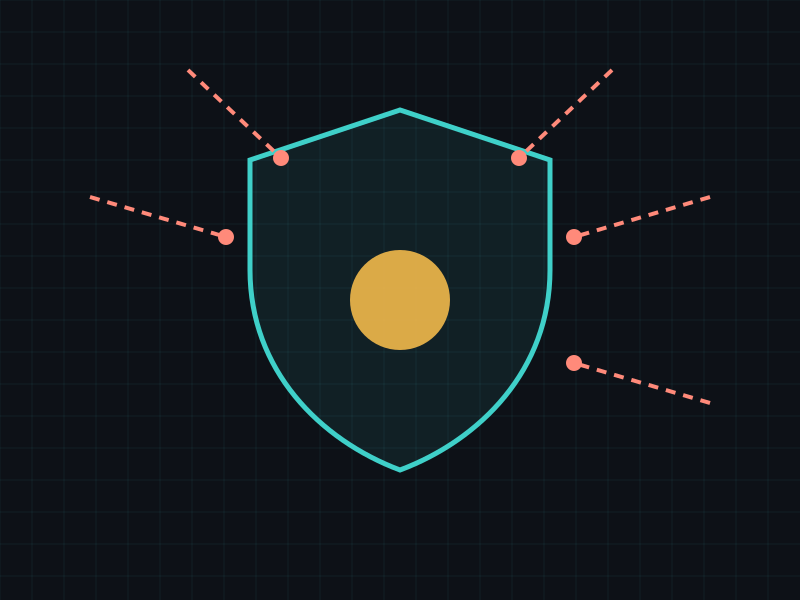
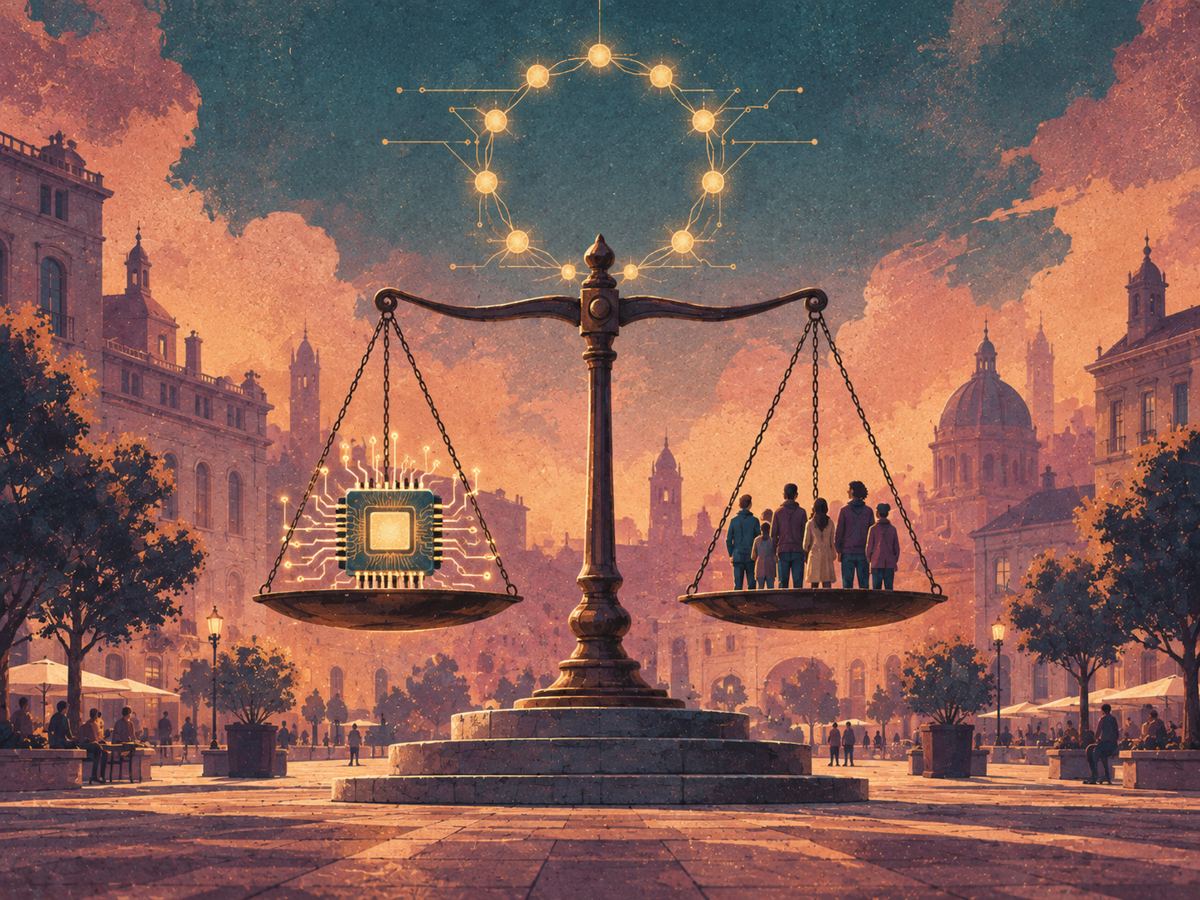
Featured exhibitThe balanceEvery use of AI involves benefits and risks. Who gets to weigh them is a human and political choice.
AI-generated illustration
2017
Deepfakes
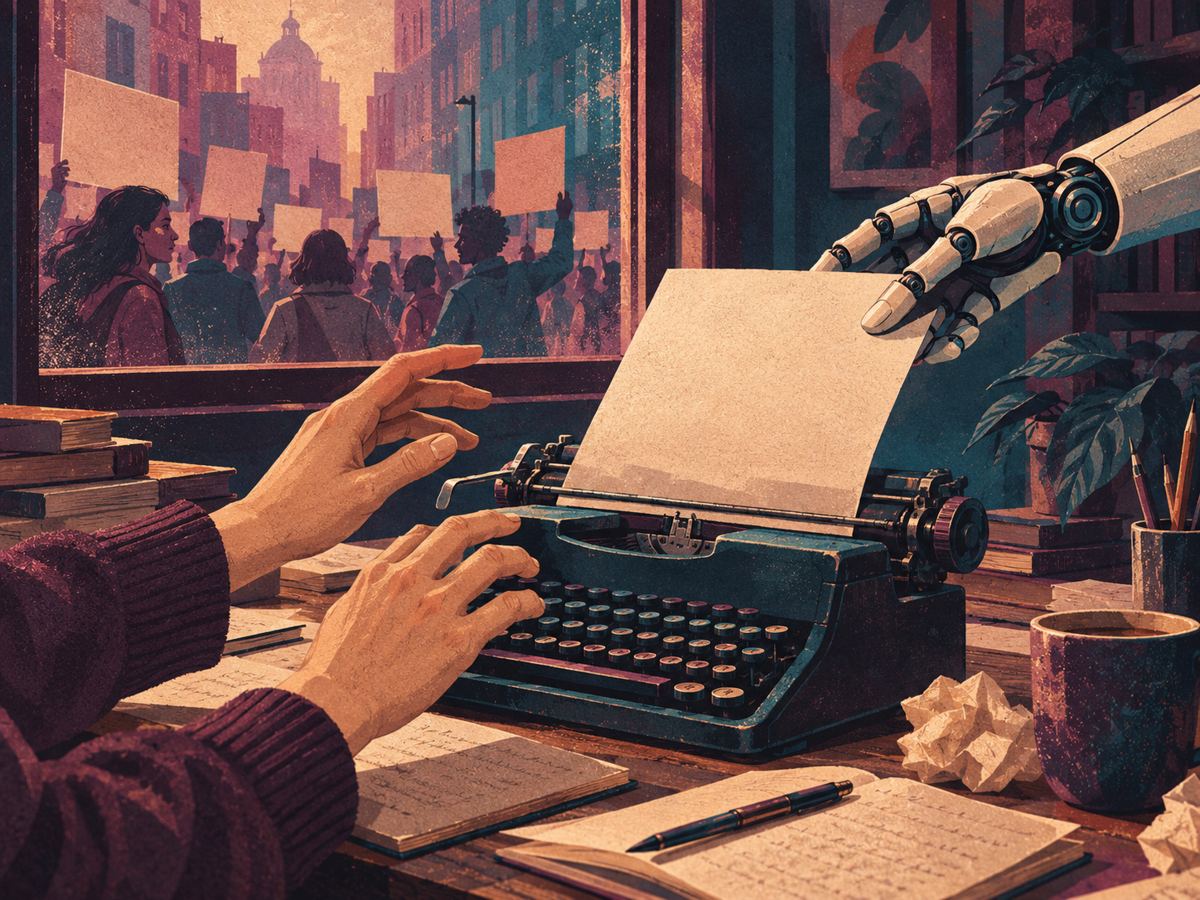
The term becomes associated with synthetic videos in which one person’s face is replaced or generated using AI. Today voice, image and video can all be fabricated convincingly, with consequences for fraud, elections and public information.
The 2023 Hollywood writers’ strike includes negotiated rules on the use of AI. The broader question remains: which jobs change, which disappear, and which new roles emerge?
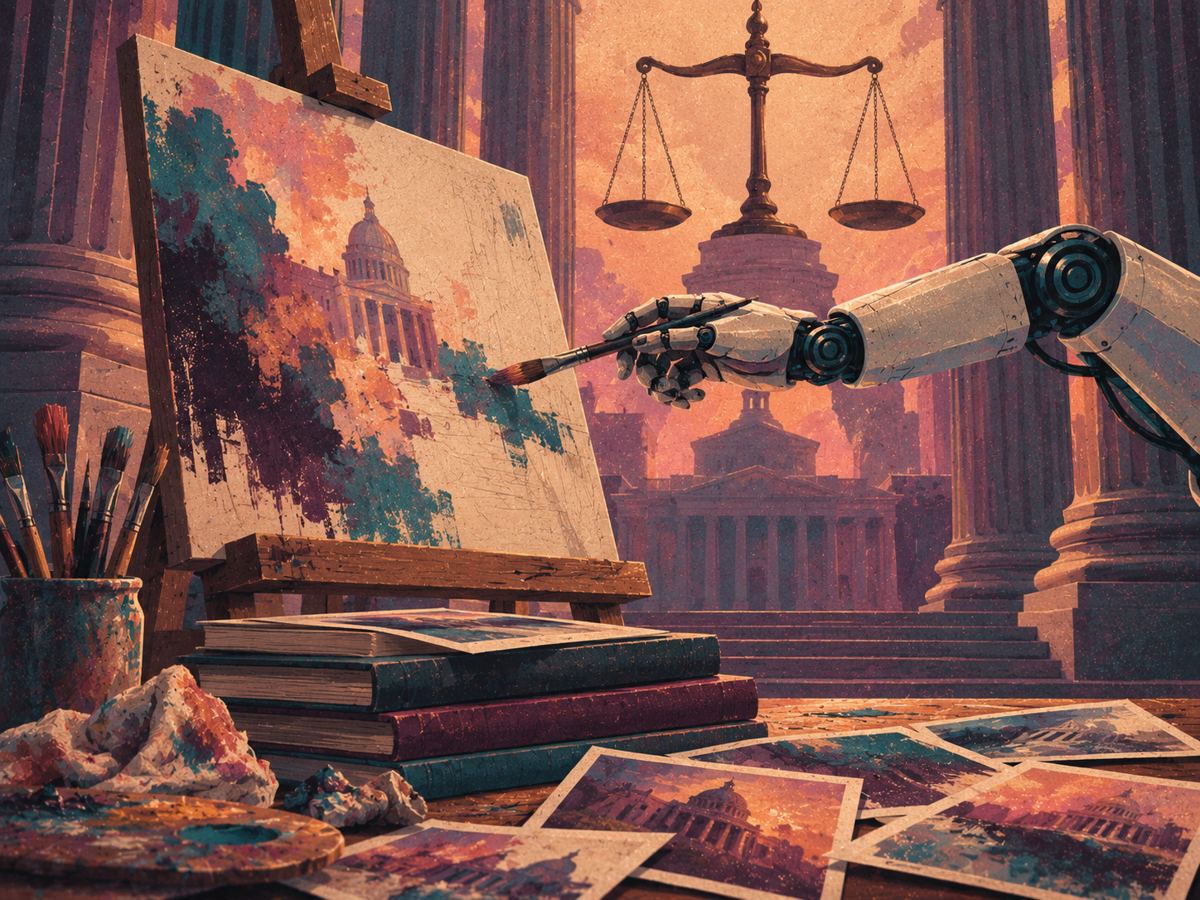
Authors, artists and news organisations, including The New York Times, take disputes over the use of copyrighted works in model training to court. Many legal questions remain unsettled.
The European Union adopts the first comprehensive horizontal law on artificial intelligence, introduced in stages. It bans certain practices and imposes stricter duties on high-risk uses such as some employment and education systems.
Four real-world dilemmas. Choose an option and see what your decision gains and what it puts at risk.
Interactive exhibit
The AI Act in practice
Read each AI use case and choose the category that fits best. The examples are simplified for educational purposes; actual legal classification depends on the specific system and context of use.
Based on Regulation (EU) 2024/1689. The AI Act applies in stages and obligations differ depending on the system and use case. Updated 7 October 2026: the transparency obligations in Article 50 have applied since 2 August 2026.
Takeaways
Many debates about AI are debates about trade-offs: speed or fairness, safety or privacy, convenience or learning.
Before sharing something striking, check the source. Basic verification remains one of the most effective defences against synthetic misinformation.
The energy and water used by data centres are also part of AI’s real-world cost.
Regulation (EU) 2024/1689 on artificial intelligence (AI Act).
Writers Guild of America (2023). Summary of the 2023 WGA MBA.
The New York Times Co. v. Microsoft Corp. & OpenAI (2023), U.S. District Court for the Southern District of New York.
Chesney, R. & Citron, D. (2019). Deep Fakes: A Looming Challenge for Privacy, Democracy, and National Security. California Law Review.
8
Artificial intelligence in Greece
Room 8, from language technology to national infrastructure
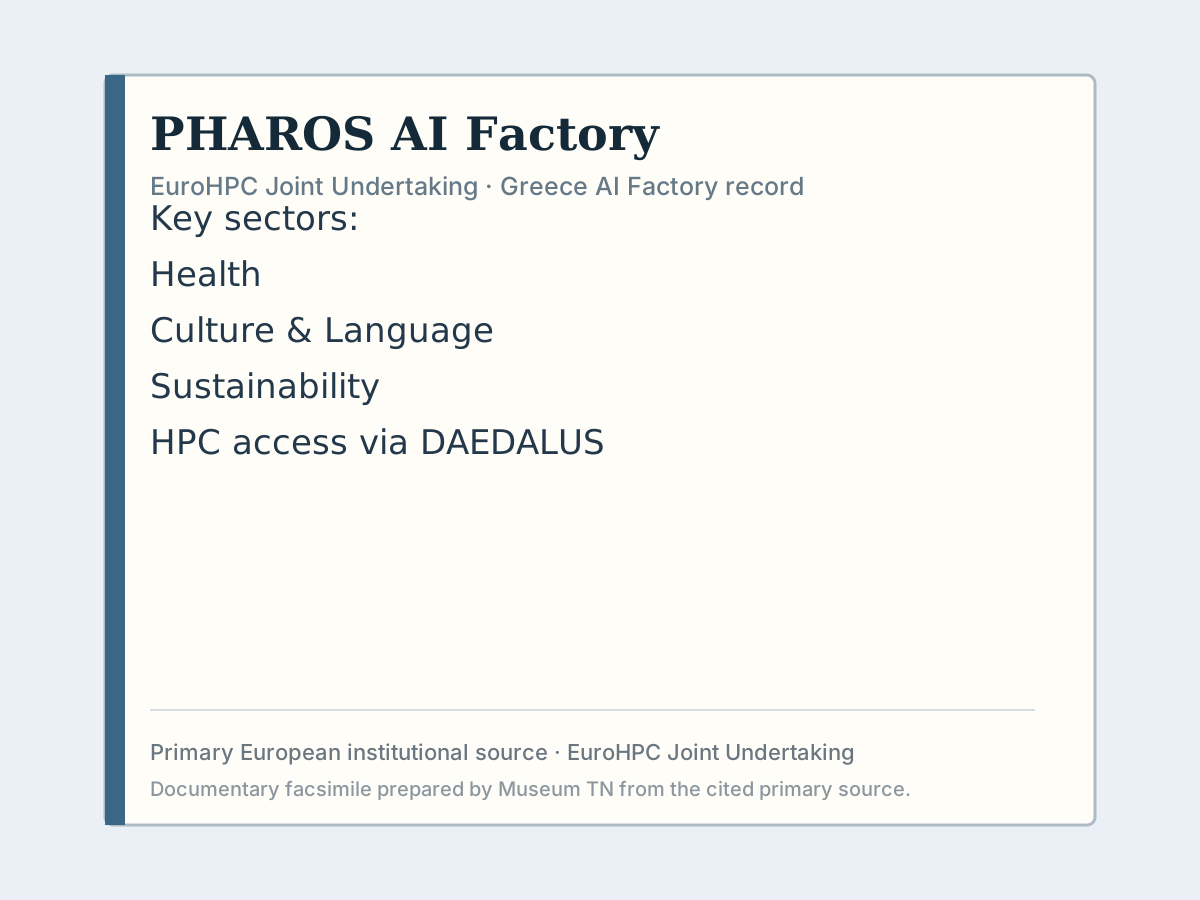
Modern Greek AI did not begin with a chatbot. Its story runs through language technology and research, open Greek language models, public-sector applications and national computing infrastructure.
Central exhibitA smaller language in the age of large modelsGreek has far less digital material than English. This room follows the effort to build resources, models and infrastructure that keep the language present in modern AI.
Digital documentary object
1985
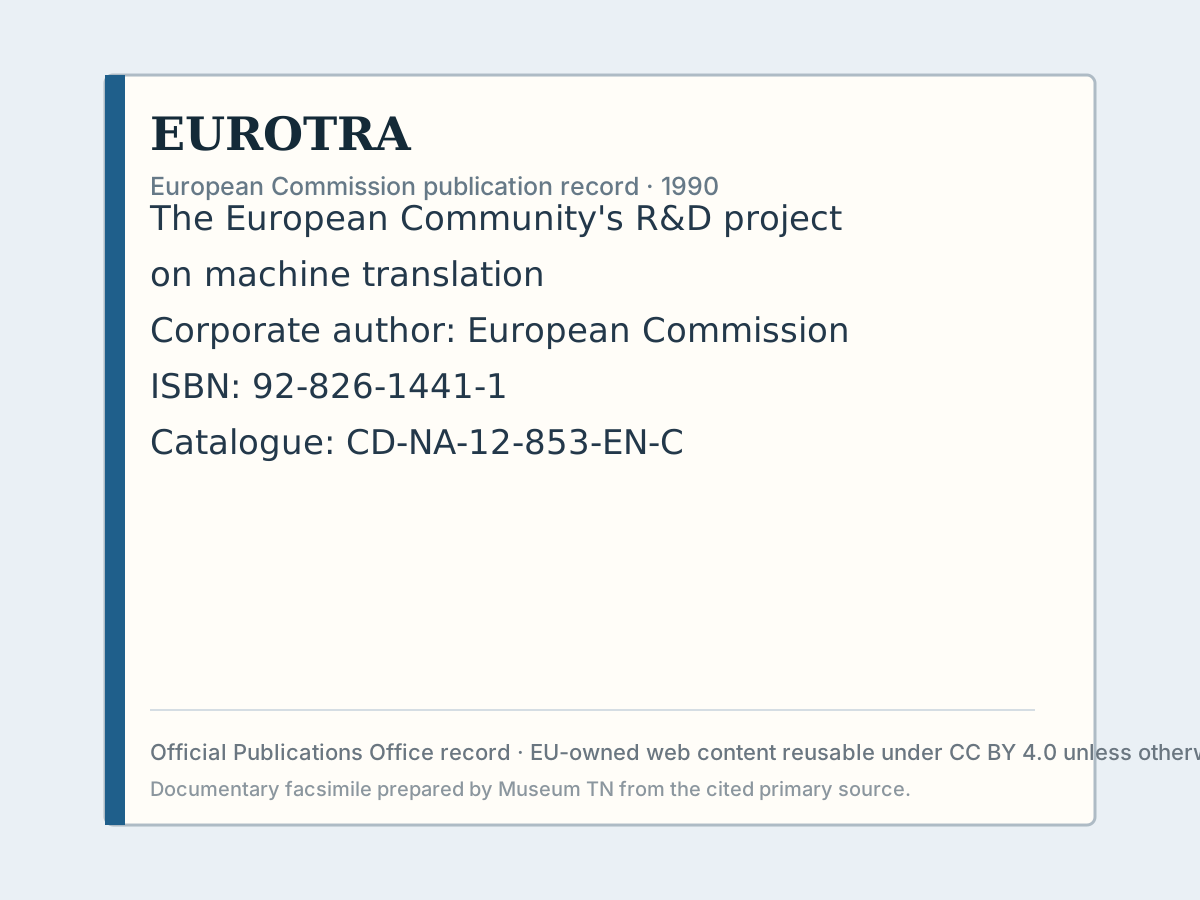
EUROTRA: machines translate Greek
A small Greek team of linguists and computer scientists joins the European EUROTRA project to build machine translation between Community languages. This work becomes a starting point for organised Greek language technology.
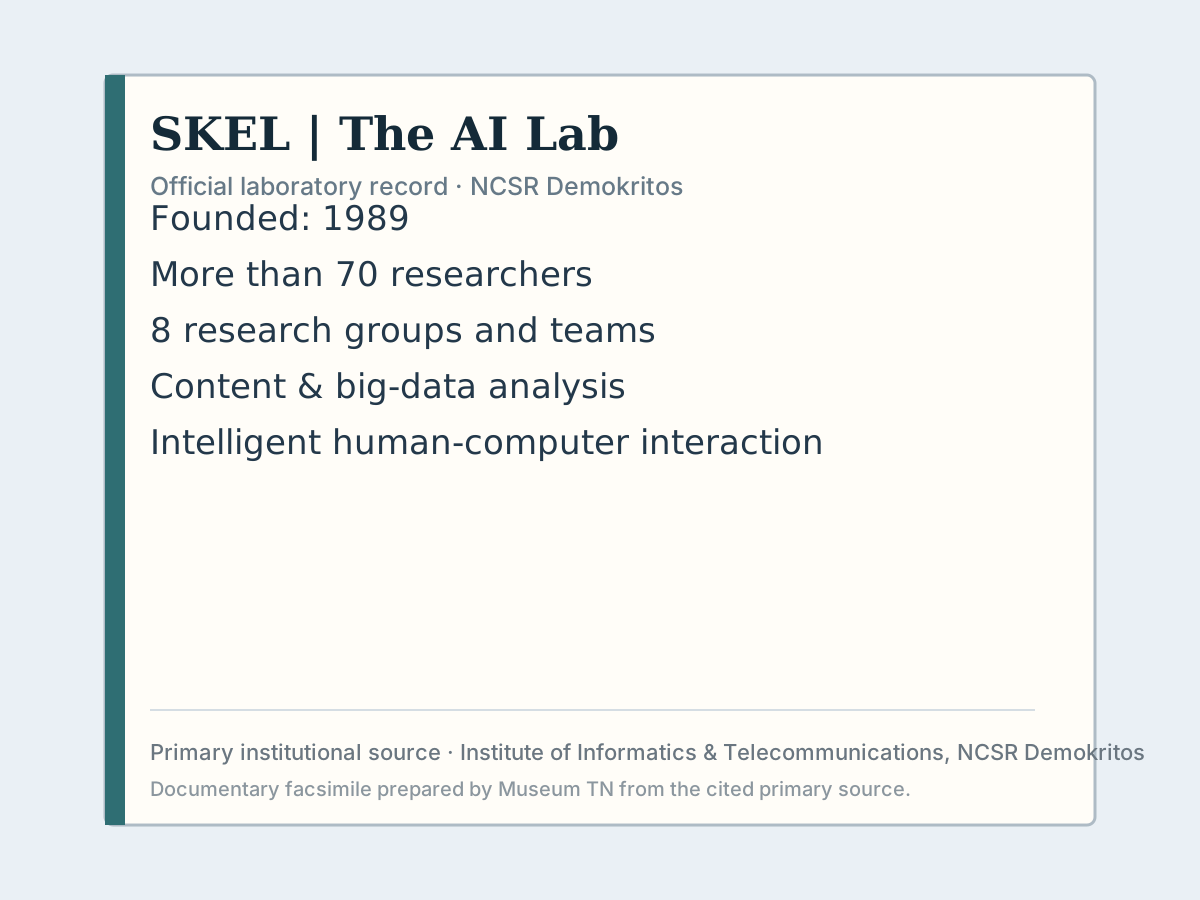
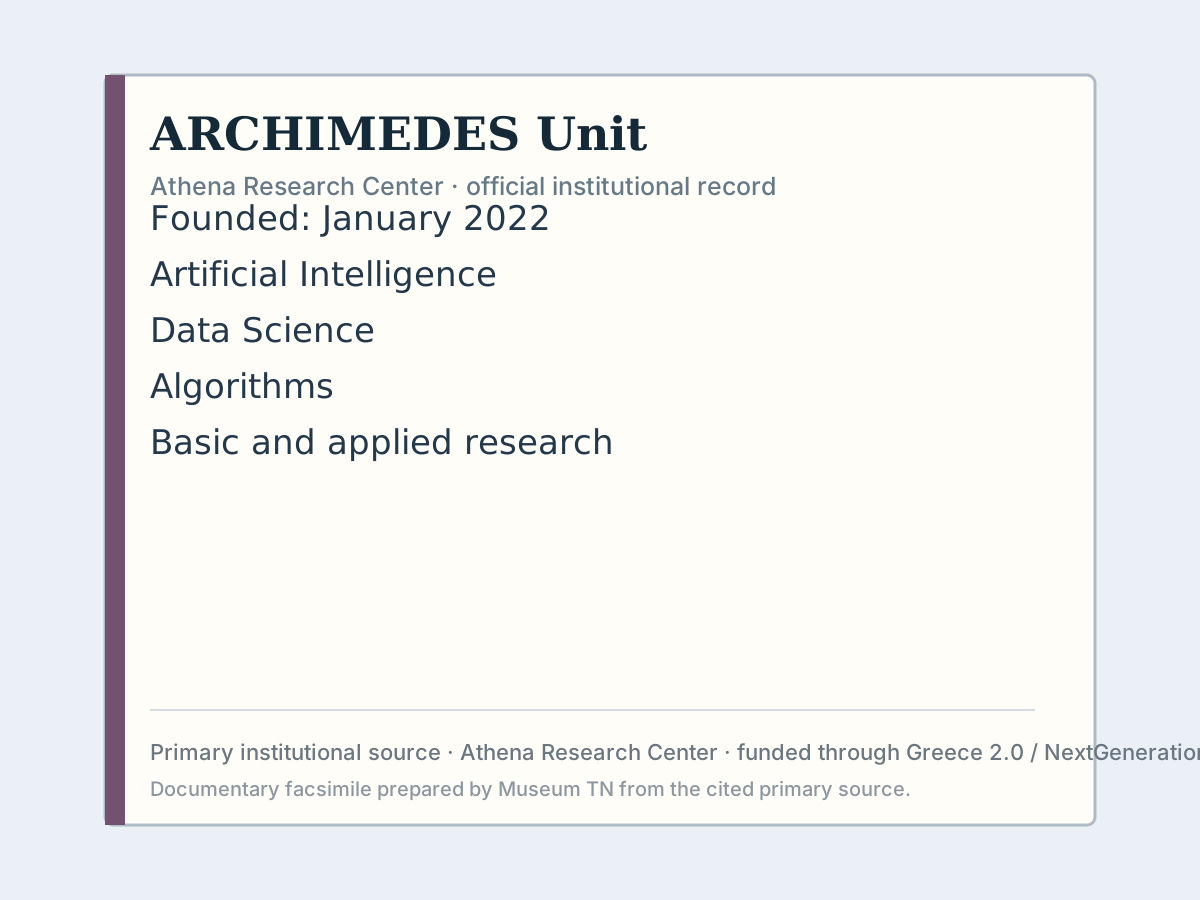
SKEL is founded at NCSR Demokritos and grows into one of Greece’s largest AI research labs, working on intelligent information systems, data analysis and human-computer interaction.
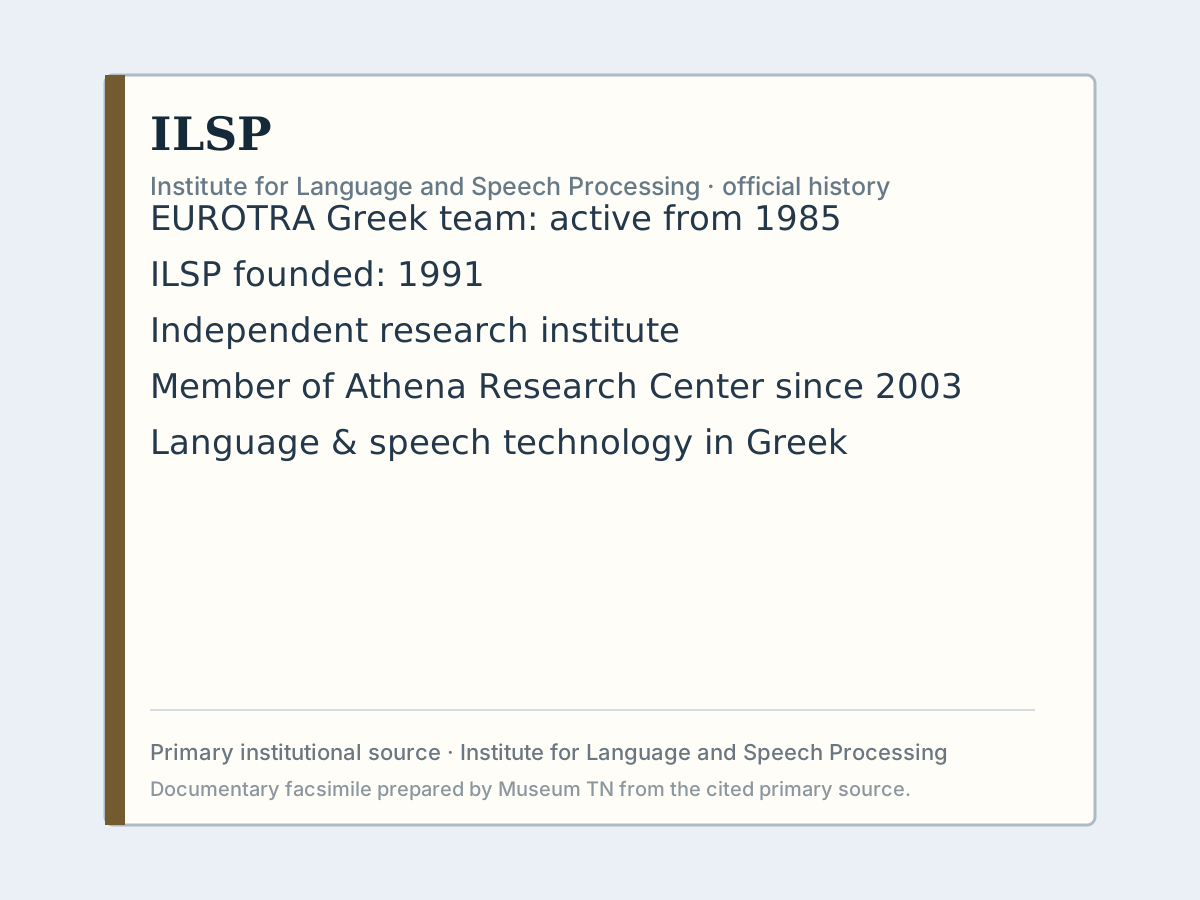
The EUROTRA team gains a permanent institutional home with the creation of ILSP. Its work expands from translation to speech, language resources, culture and human-machine interaction.
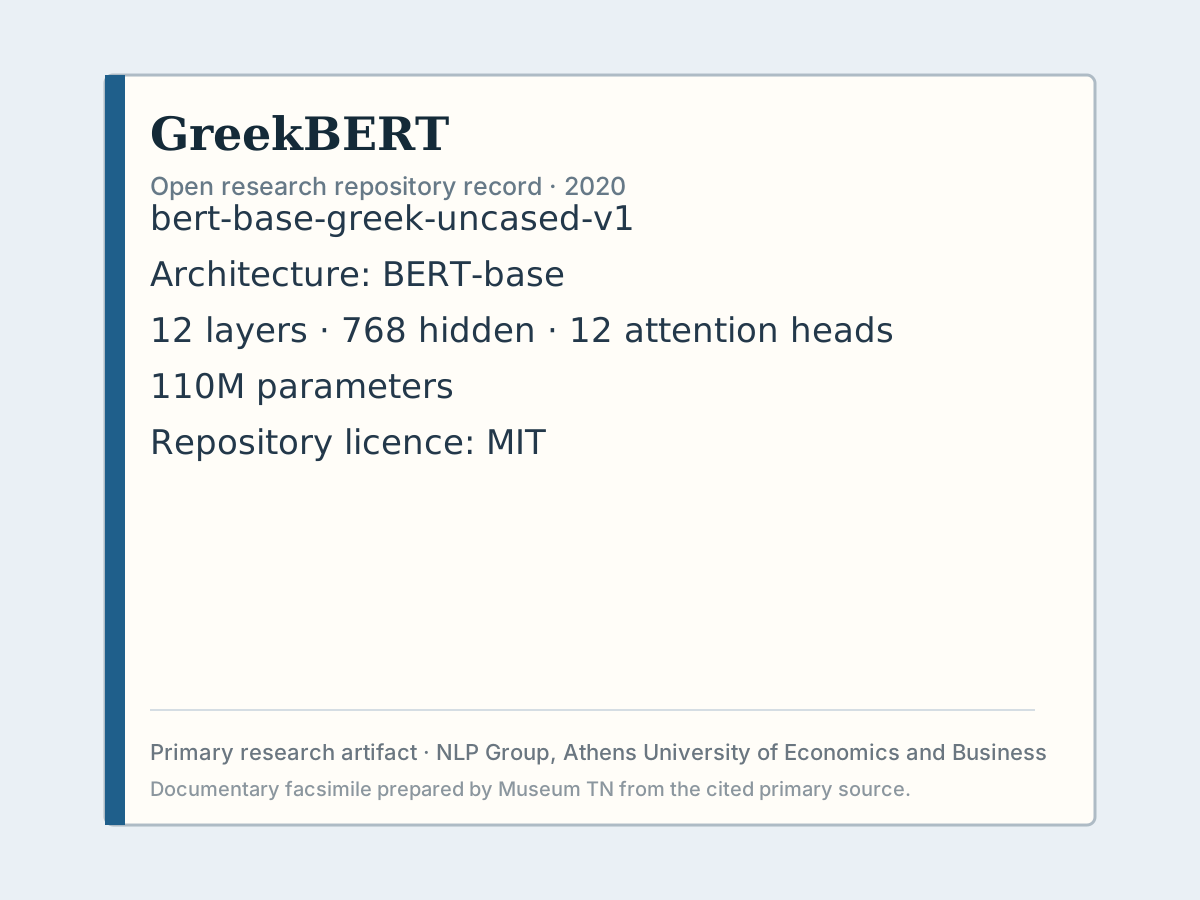
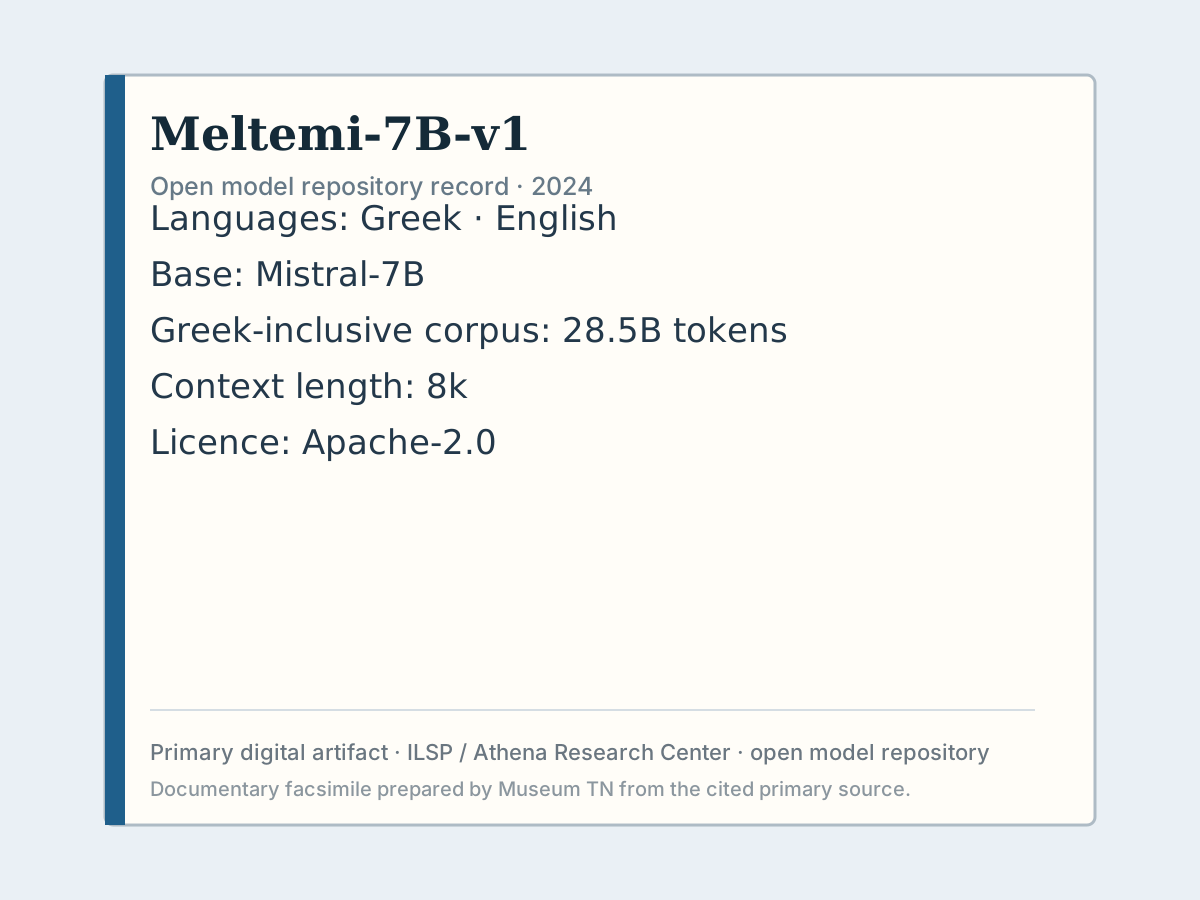
Researchers release a BERT model trained specifically on Greek text, showing why a language with far fewer digital resources than English benefits from dedicated models and evaluation.
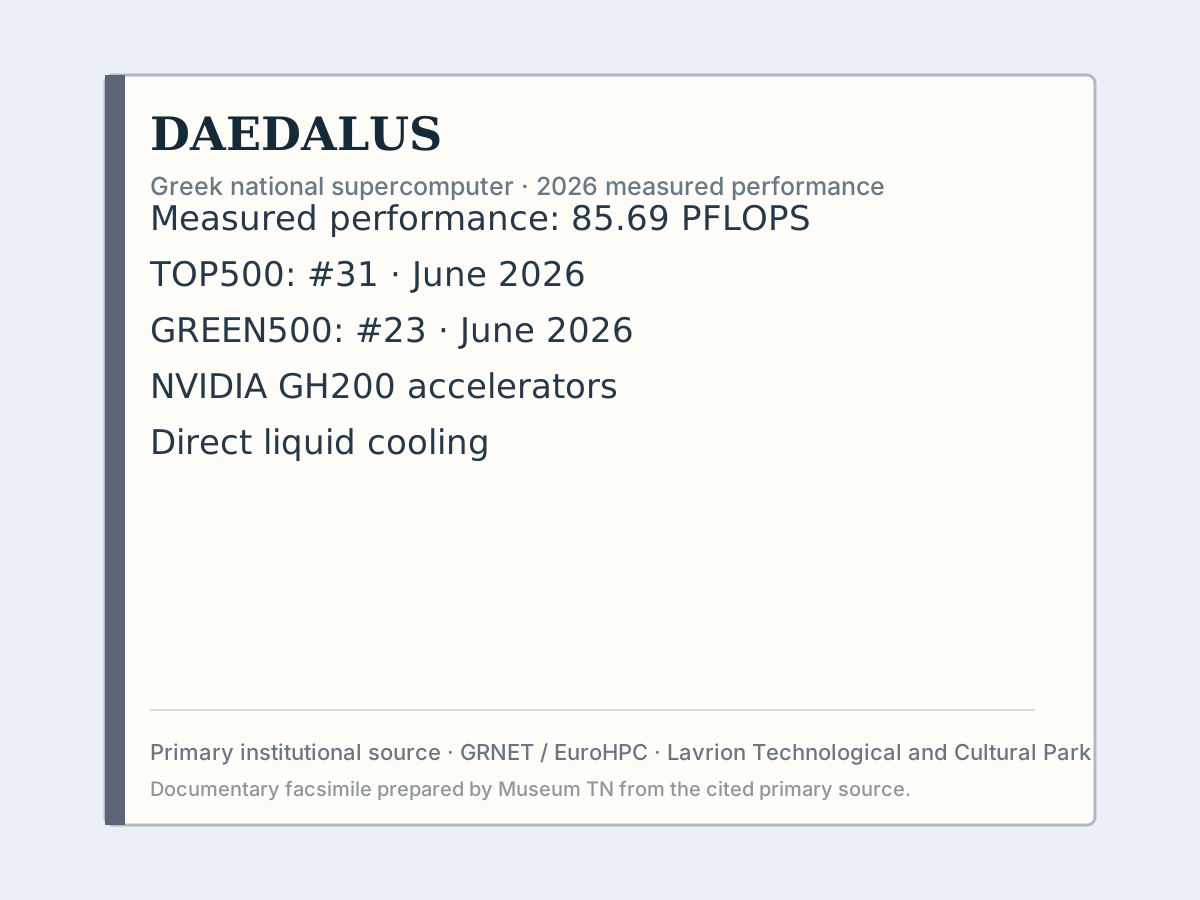
The DAEDALUS supercomputer brings new national computing capacity for science and AI. In the June 2026 TOP500 it ranks 31st with measured performance of 85.69 petaflops.
GRNET, DAEDALUS.Primary institutional or scientific source for this exhibit.
9
The future of artificial intelligence
Room 9, trends, scenarios and uncertainty
This room does not treat forecasts as facts. It separates what is already happening, strong technological trends and futures that remain genuinely uncertain.
Central exhibitThree paths, not one prophecySomething already happening is different from a strong trend, and both are different from a highly uncertain scenario.
Curatorial illustration
2026 →Already happening
From chatbot to agent
AI systems are beginning to use computers and tools to complete sequences of actions. On OSWorld, agent performance rose from roughly 12% to 66.3% in a year, yet agents still fail about one in three structured attempts.
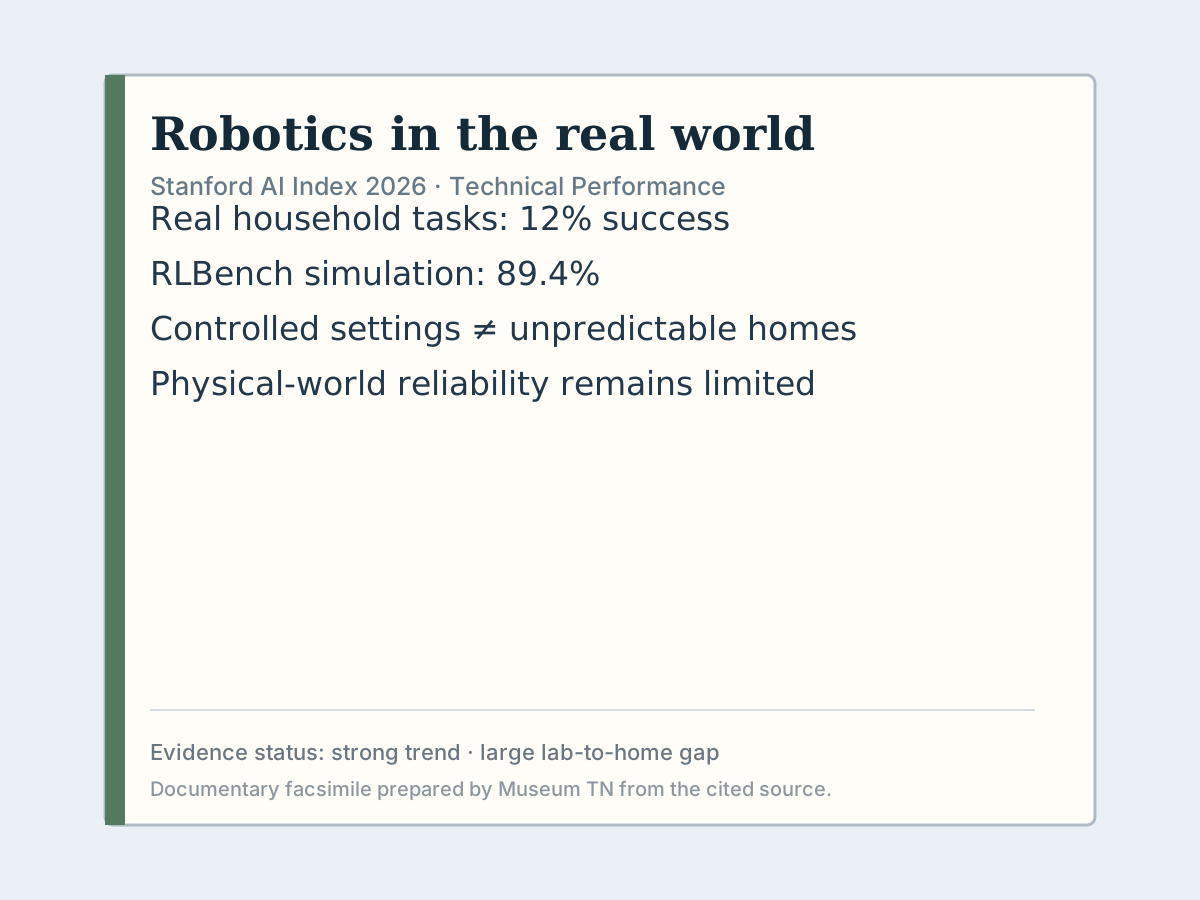
Robotics is increasingly connected with vision-language models. Yet the gap between a controlled lab and an unpredictable home remains large: the 2026 AI Index reports only 12% success on real household tasks.
Self-driving laboratories combine AI, robotics and automation: a system proposes an experiment, runs it and uses the result to choose the next step. Today they mostly operate in narrow, well-defined domains.
AI is already used in diagnosis, drug discovery and research on medical digital twins. Early results are promising, but clinical reliability and generalisation require rigorous evaluation.
Generative AI is already widespread in study and education. The question is shifting from whether students will use it to what humans should learn when machines can write, solve and explain.
The ILO estimates that one in four workers is in an occupation with some GenAI exposure. In the near term, task transformation is more likely than the automatic disappearance of whole occupations.
The future is not only about ever larger models. Smaller systems can run locally, specialise in specific domains and offer lower cost or better privacy.
AI depends on physical infrastructure: chips, data centres, cooling and electricity. In the IEA base case, global data-centre electricity use roughly doubles to around 945 TWh by 2030.
As AI enters higher-stakes decisions, requirements for transparency, evaluation, provenance and accountability grow. In Europe the AI Act is being phased in over several years.
There is no scientific consensus on whether or when artificial general intelligence will exist. Current systems show increasingly autonomous capabilities, but that does not establish an inevitable path to AGI or loss of control.
Choose a card and decide whether it describes something already happening, a strong trend or a highly uncertain future. Then compare your answer with the evidence.
Time capsule
What do you think will be true in 2030?
Choose up to three predictions. They are stored only on your device so you can return later and compare.
What to remember
AI capabilities are moving quickly, but progress is uneven and “jagged”.
AI’s future depends on energy, chips, data, institutions and human choices, not only on algorithms.
There is real scientific disagreement about AGI and long-term loss of control. Uncertainty is part of the exhibit.
You have seen how AI works and why it can produce something persuasive but wrong. In the Lab, you practise the skill that matters most: checking the answer.
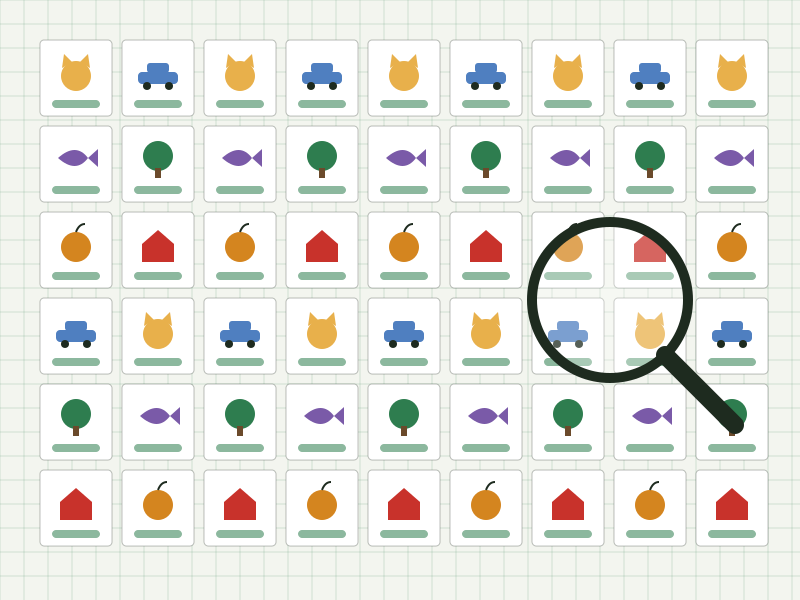
Featured exhibitThe magnifying glassThe most useful tool when faced with a persuasive answer: verification.
Interactive exhibit
Check the answer
You asked an AI assistant “Who was Alan Turing?” and received the statements below. They are not all the same kind. For each one, decide what it is.
Interactive exhibit
Before trusting an answer
Five questions worth asking every time. Use them as a checklist.
Interactive exhibit
Build a good prompt
A good question helps, but it does not replace verification. A model cannot guess what you have in mind. Fill in the fields and see how the request becomes more specific. The examples are only suggestions.
Your visit is complete
From Hephaestus’ golden assistants to today’s LLMs, one idea persists: machines built to assist people. What changed is that today’s systems learn patterns from data.
AI is a powerful tool, not an authority. Judgment remains yours.
Continue learning
Elements of AIA free course for visitors who want to go deeper after the museum.
Museum of Artificial Intelligence is an independent, open digital curatorial project for people who want to understand how we arrived at today’s artificial intelligence without needing a programming background. Access is free and no account is required. History, evidence and experiments matter equally: see what happened, try the idea, then check the source.
What kind of museum is this?
This is not a school course behind an access code and it is not affiliated with an artificial intelligence company. Its purpose is to present the history and ideas of AI publicly, with sources that visitors can inspect. The word “museum” describes the way the digital collection is organised and interpreted; it does not imply membership in a state or institutional museum network.
The collection
The visit begins with ancient Greek ideas about automata and logic and ends with today’s language models, across ten rooms and a workshop. Room 0 does not present its objects as “ancient AI”; it treats them as earlier forms of questions that return later in the exhibition.
Curatorial approach
The exhibition follows a simple idea. Each time we ask a machine to do something once associated with human thought, our definition of intelligence shifts. That is why successes, failures and disagreements appear together. Technological development is not presented as inevitable, and not every historical automaton is treated as a precursor to AI.
Curatorial and technical policy
How we work
Documentation. Where possible, every historical or technical claim is tied to a specific primary source or a reliable secondary source.
Images. Historical photographs and real objects are distinguished from artistic reconstructions. When an image was generated with AI, that is stated clearly.
Accessibility. The design follows WCAG 2.2 principles, with keyboard navigation, alternative text and controls for contrast, text size and reduced motion.
Review. Sources and image rights are kept in an open register so they can be reviewed and corrected.
Every exhibit should answer four practical questions. What exactly are we claiming? Which source supports it? What kind of image are you looking at? Which part of the text is our curatorial interpretation? Where confidence is lower, that is stated.
What counts as evidence
Primary sourceA text, scientific paper, law or physical object from the period being discussed.
Educational reconstructionA diagram or interactive model that explains an idea without being presented as an authentic historical object.
Artistic reconstructionAn illustration used to support the narrative. If it was generated with AI, the label appears beside the image.
Curatorial interpretationA connection we draw between evidence and the exhibition theme. It is not presented as the historical fact itself.
Open documentation register
The exhibit catalogue and image-rights register are also available as JSON, so the documentation can be inspected independently rather than remaining hidden inside the interface. documentation file (JSON) and image and rights register (JSON).
How the content was created
Every room includes a Documentation section with its sources and the date of the latest update.
AI tools were used during writing and design. The content was checked for accuracy, but errors may remain. Corrections are welcome.
Images labelled “AI-generated illustration” are artistic reconstructions created with an image-generation tool. They are not photographs of real objects or people.
The diagrams in Rooms 3, 4 and 6 are educational illustrations produced for the museum.
Historical photographs are sourced from Wikimedia Commons, with the licence and creator credited beside each image.
Independence
The museum is an independent educational project. It is not affiliated with an AI company and does not promote a product. Examples are used to discuss the technology more broadly.
Creator
Concept and curation: Konstantinos Koustas.
Last updated: October 2026.
Privacy
The Museum of Artificial Intelligence does not require an account, does not use cookies and does not collect personal information. Here is what happens when you visit.
What you type in the exhibits stays on your device
ELIZA, the mini language model, the prompt tool and all interactive activities run entirely in your browser. What you type is not sent anywhere.
Local storage
Your browser can remember your visit progress, selected route, text size and display or motion preferences. Everything is stored locally on your device and is not sent to us. You can reset progress from the lobby, reset accessibility settings from the top menu, or remove the data through your browser settings.
Visitor statistics
We use Cloudflare Web Analytics to measure aggregate traffic, such as page visits, without cookies and without tracking individual visitors.
Hosting
The site is hosted on Cloudflare Pages. Like other hosting providers, Cloudflare processes technical connection data such as IP addresses in order to serve and protect the site, under its own privacy policy.
External content
Some historical photographs are loaded directly from Wikimedia Commons, so your browser also connects to Wikimedia servers to display them. Fonts are hosted on this site. Links to external museums and sources lead to websites with their own policies.