It is never too late to learn something new
How artificial intelligence can help us acquire new knowledge, develop professionally or even change careers.
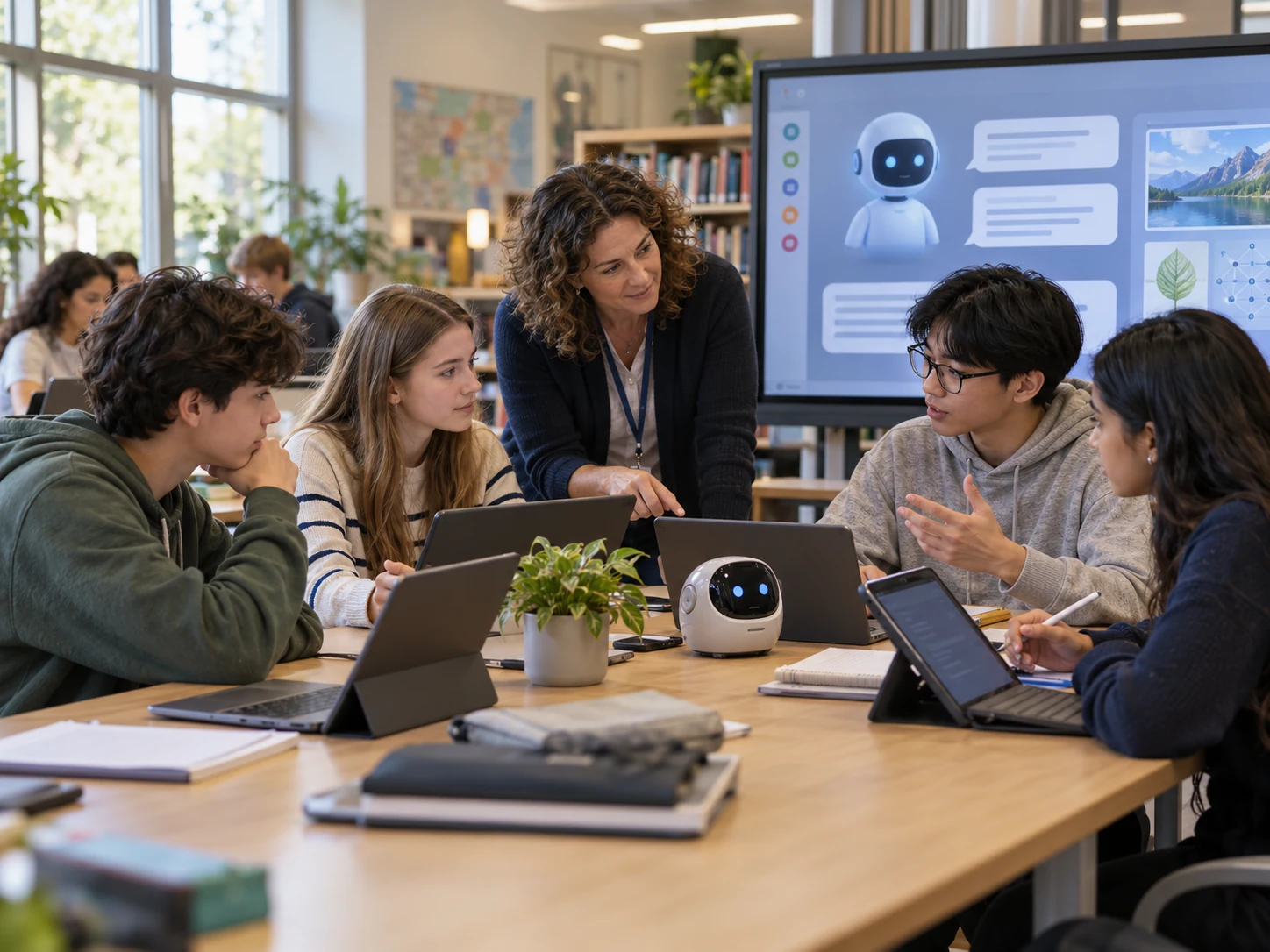
How often have we thought about improving our English, learning to code or taking an Excel course, only to put it off? Sometimes money is tight; sometimes the timetable simply does not work. As the years pass, the prospect of going back to class can seem harder.
Artificial intelligence has changed the situation. With a computer or even a phone, we can start a lesson when it suits us. Free educational material existed online long before generative AI. What is different now is that we can ask for another explanation, ask follow-up questions and practise the things we find difficult. Several services have free tiers, although usage and features may be limited.
An English lesson on your phone
Suppose you know a little English but struggle to speak it. Ask an AI assistant to play the role of a hotel receptionist in London. Try to make yourself understood, then ask it to explain your mistakes in your own language. A voice-enabled tool may also let you practise speaking. For pronunciation and subtle points of usage, reliable teaching materials or a teacher are still worth consulting.
What about learning to code?
You do not need to know what a variable is to begin learning Python. Ask for a first lesson for someone who has never written code. Try a short exercise yourself. If it does not work, ask for a hint to find the error. You can do much the same with Excel: instead of only watching videos about formulas, work with a fictional household budget and learn to create a formula or chart. Use sample data rather than personal or confidential workplace files.
What if we want to change careers?
Imagine someone who has spent years in an administrative role and would like to move into data analysis. They can start with what they already know from work, improve their Excel skills, move on to SQL and Python, and practise with public or fictional datasets. AI can help them plan their studies, suggest exercises and explain why a solution does not work. Over time, they can build projects of their own and learn to present and explain them independently in an interview.
The need for new skills is not limited to people just entering the workforce. According to the World Economic Forum’s Future of Jobs Report 2025, the employers surveyed estimate that 59 out of every 100 workers will need training by 2030. The OECD also highlights the importance of lifelong learning during career transitions. AI can support that effort, but cannot guarantee employment. Some professions require particular qualifications, certification or practical experience. What matters is that we can explore a new direction before committing financially to a course. [4] [5]
Where do I start?
A simple request with a clear goal is enough to get started. For instance, you could write:
I want to learn English. I know a few words and have 20 minutes a day. Ask me some questions to assess my level, then prepare a four-week plan. Give me exercises in each lesson and explain my mistakes. At the end of each week, test me without giving me the answers.
Change the subject and you can request a similar plan for Python, Excel or another skill. Whether it takes four weeks or six matters less than being able to use what you have learned on your own.
Are we actually learning or just getting answers?
Two studies published in 2025 are worth noting. In a Harvard physics course, a purpose-designed AI tutor produced better results on tests following the lessons. In a separate high-school mathematics study, pupils using an unrestricted assistant performed worse when later tested without it. Hints rather than ready-made answers largely mitigated the problem. These findings concern particular teaching settings; they do not prove that everyone will learn better with any AI tool.
AI can make mistakes even when it sounds confident. It does not remove the need for teachers, structured training or recognised examinations where required. It does, however, give someone who could not afford lessons a chance to start and discover whether the subject really interests them. Perhaps the English lessons you have put off for years can begin tonight, with twenty minutes of practice.
In exhibit 9.5 in Room 9, try three ways a digital tutor approaches the same problem. See the difference between being given the answer and being helped to find it.
Sources and further reading
- Kestin et al. (2025), Scientific Reports: AI tutoring outperforms in-class active learning
- Bastani et al. (2025), PNAS: Generative AI without guardrails can harm learning
- UNESCO (2023), Guidance for generative AI in education and research
- World Economic Forum (2025), The Future of Jobs Report 2025
- OECD (2025), Education Policy Outlook 2025: Nurturing Engaged and Resilient Lifelong Learners in a World of Digital Transformation